
Tilicho Lake Trek
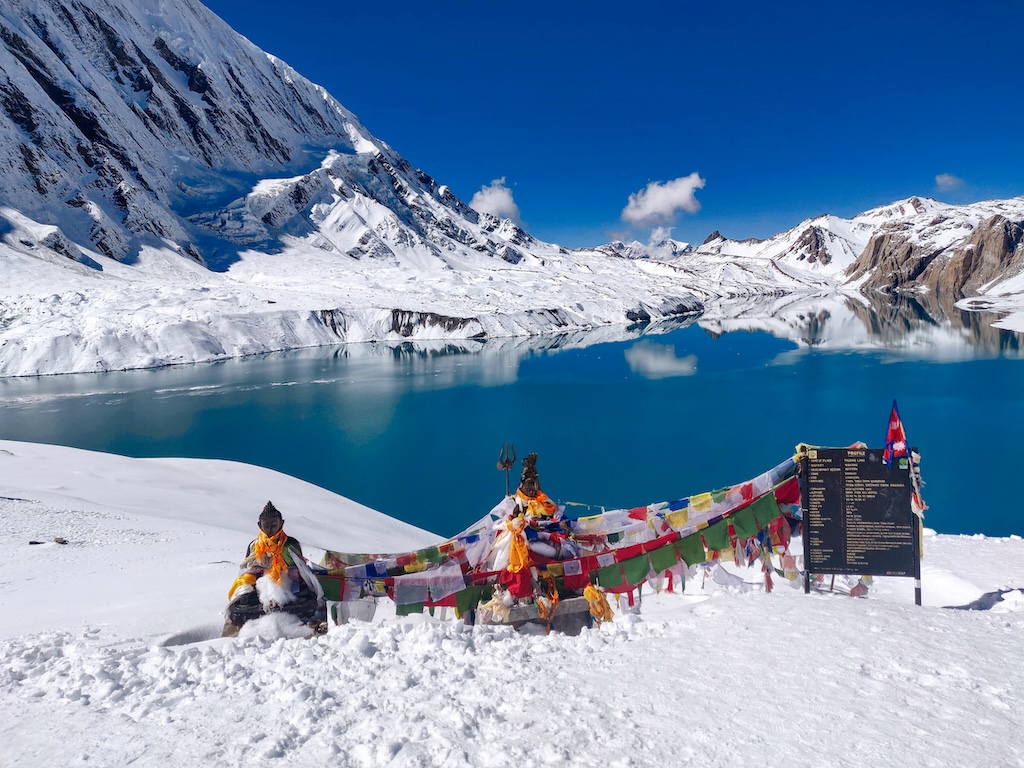
Trek Highlights- What to Expect?
- Hike to Tilicho Lake, the highest glacial lake in Nepal.
- Surreal mountain sights of Annapurna II, III, Gangapurna, Pisang Peak, Manaslu, Lamjung Himal, Tukuche Peak, and more.
- Acclimatization in Manang, visit to Gangapurna Lake.
- Take a serene walk through the vibrant landscapes of Ghyaru, Ngwal, and Manang.
- Visit to Manang Valley apple orchard and brewery, the largest apple orchard in South Asia.
- Amazing lodges with quality meals and overnight accommodation.
- Option to trek further to Thorong La and Muktinath.
Tilicho Lake Trek Cost- For 2025/2026 season
|
Pax |
Price Per Person | Availability | Want to book? |
|
1-2 |
USD 850 | Available | |
| 3-4 | USD 800 | Available | |
|
5-6 |
USD 780 | Available | |
|
7 and more |
USD 750 | Available |
Cost Details
Here’s what we offer as a full board service upon paying the trek cost to us. Please note that this cost is a one-time payment with no hidden costs.
Cost Excludes
- Lunch and dinner during your Kathmandu stay
- Additional accommodation in Kathmandu for various reasons
- Trek porter
- Personal expenses (Use of WiFi, hot drinking water, hot shower, battery recharge, additional trek porter, soft drinks, meals other than the main course, etc.)
- Helicopter rescue during medical emergency and rapid evacuation (compensated by your travel insurance)
- Loss, theft, or damage of personal belongings (compensated by your travel insurance)
- Private vehicle transportation (We provide shared transportation for individual trekkers. However for groups, private vehicles are available)
Tilicho Lake Trek Itinerary- Detailed Breakdown
Day 2: Trek from Dharapani to Koto (2,620 meters, 14 km, 6 hours)
You'll start the trek from Dharapani to Koro after breakfast at the tea house in Dharapani.
Approximately 20 minutes from Dharapani is the Annapurna Conservation Area check-post, where you'll stop to check in for your trek permit.
The route progresses to Bagarchap and Danaque and ascends to Timang. The entire uphill is through the serene pine and rhododendron forest. Moreover, you'll get a picturesque sight of Mt. Manaslu from the tea houses at Timang.
The entire trek from Timang to Koto follows an unpaved motor road. As a result, occasional passing jeeps can make the route dusty and rough underfoot. However, the unique sight of Lamjun Himal and Annapurna II makes the walk enjoyable.
Upon reaching Koto, you'll be accommodated at a tea house.
Day 3: Trek from Koto to Pisang (3,310 meters, 16 km, 8 hours)
Koto to Pisang is a long but beautiful walk with amazing mountain panorama, an apple orchard, and a picturesque landscape.
You'll start the trek from Koto at 8 am. A 30-minute walk from Koto is Chame, the headquarters of the Manang district. You'll cross a bridge over the Marshyangdi River and trek to Brathang. Here, you'll stop at Manang Valley Apple Orchard, the largest apple orchard in South Asia. You'll also visit the farm and try some fresh apples from the trees.
From Brathang, the route gets a bit steep after you cross a suspension bridge. A gradual one-hour walk after the bridge takes you to Dhikur Pokhari. Here, you'll stop at a tea house for lunch.
The picturesque view of Swargadwari, or "Heaven's Gate," captivates with its semi-arch-shaped stone wall that resembles a massive sloping stone mountain.
After lunch, continue a scenic 1.5-hour trek to Pisang. The path leads to Upper Pisang, where the striking sight of Annapurna II and Gangapurna awaits.
Overnight at a tea house in Upper Pisang.
Day 4: Trek from Pisang to Manang (3,519 meters, 16 km, 8 hours)
Pisang to Manang tires you a lot. However, the surreal mountain panorama all day mesmerizes you. Moreover, the vibrant landscape of Pisang, Ghyaru, Humde, and Ngawal is heartwarming.
Leaving the tea house after breakfast, you'll trek for 45 minutes and stop at Green Lake. It's a small lake midst of the pine thickets with the picturesque reflection of Annapurna II.
From Green Lake, the route is all flat till a suspension bridge, close to the Chhortens (stupas). And once you cross the suspension bridge, it's all up to Ghyaru. It takes at least two hours to climb up to Ghyaru. It's a small hamlet facing Annapurna and Pisang Peak in the backdrop.
From Ghyaru, you'll trek two more hours to Ngawal on a winding route with occasional ascents and flats.
You'll stop at a tea house in Ngawal for lunch.
After lunch, the trail to Manang follows a motor road with entirely flat terrain. Occasionally, strong winds blow, making it chilly during Autumn.
Two hours from Ngawal is Bhraka, and another 30 minutes from Bhraka is Manang.
You'll settle in at a tea house in Manang.
Day 5: Acclimatization in Manang. Hike to Gangapurna Lake (3,600 meters, 2 hours)
Finally, it's a rest day to relax, sip coffee, bask in the sun, and explore around Manang.
After breakfast at the tea house, you'll hike to Gangapurna Lake, a glacial lake formed by runoff from the glaciers of Gangapurna, Annapurna IV, Khangsar Kang, and Glacier Dome. The lake's turquoise blue water is mesmerizing.
After visiting Gangapurna Lake, you'll hike 30 minutes further to the viewpoint. From here, you'll get the wholesome sight of the Annapurna mountains, Yak Kharka, and almost the entire landscape of Manang.
Once you're done with the acclimatization hike, you'll return to the tea house for lunch.
The entire day is yours. It's best to rehydrate, take a hot shower, and get ample rest.
Dinner and overnight accommodation will be at the tea house in Manang.
Day 6: Trek from Manang to Tilicho Base Camp (4,150 meters, 20 km, 8 hours)
The trek from Manang to Tilicho Base Camp is easy and difficult. Easy in the sense that there are very few ascents. The difficulty arises from crossing the Tilicho landslide, which is covered in slippery pebbles and features falling rocks.
Leaving Manang, you'll trek along the motor road until Khangsar. In only a few sections, you'll avoid the dusty motor road.
You will need at least two hours to trek from Manang to Khangsar.
Two hours of slow-paced walking from Khangsar is Sri Kharka, the lunch place. Here, you'll stop for lunch.
After Sri Kharka, the trail becomes flat and enters the challenging section, the Tilicho Landslide.
It takes at least two hours to walk the entire landslide section, which is almost to Tilicho Base Camp.
Finally, upon reaching Tilicho Base Camp, you'll settle in at a tea house for dinner and overnight accommodation.
Day 7: Trek from Tilicho Base Camp to Tilicho Lake (4,919 meters, 4 km, 3 hours). Return to Sri Kharka (4,080 meters, 6 km, 4 hours)
With a packed breakfast, you'll leave the tea house for Tilicho Lake. It takes 3-4 hours to trek to the lake from Tilicho Base Camp. As most sections are uphill and the altitude is close to 4,800 meters, it gets tiring.
The most popular section, 22 turns, is a steep climb and takes 1-1.5 hours. However, after completing this demanding section, the route is less sloppy and comfortable.
Edging to Tilicho Lake, the route gets flatter.
You'll see a mesmerizing sunrise over Gangapurna and other mountains around. Moreover, the arid Tilicho landslide becomes cinematic as the morning wind blows the sands from the cliffs.
You'll stay at the lake shore for at least an hour for photographs and sightseeing. With the surreal lake view, you'll have breakfast at the tea shop by the bank of the lake.
You'll trek back the same route to Tilicho Base Camp.
With lunch at the tea house, you'll prepare for the return. You'll trek for three hours to Sri Kharka and stop at a tea house for overnight accommodation.
Day 8: Trek from Sri Kharka to Khangsar (1.5 hours, 3,750 meters). Drive to Besisahar (7 hours)
With breakfast, you'll trek to Khangsar.
From Khangsar, you'll take a jeep ride to Besisahar for 7-8 hours.
You'll stop at a tea house along the road for lunch. Moreover, you'll stop at Chyamche waterfall for a tea break.
Upon reaching Besisahar, you'll get transferred to Hotel Tukuche Peak.
Day 9: Drive from Besisahar to Kathmandu (1,355 meters, 5 hours)
You'll take a private jeep (if trekking in a group) or a public bus from Besisahar to Kathmandu. It's a 5-hour drive.
You'll get transferred to the hotel in Kathmandu.
With this, the 9 days Tilicho Lake Trek ends.
Tilicho Lake Trek- Additional Trek Information
It’s essential that you gain a thorough understanding of the trek. It provides a comprehensive overview of what actually happens during the 9-day trek. For example, you’ll learn in detail about the meals, accommodation services, transportation, trek difficulty, safety, seasonal impact, and more.
Let’s get started!
Trek Bookings and Cancelation
How can I book this trek with NepTrek?
We want you to be 100% sure about embarking on this trek before proceeding with the trek booking. Once you send the confirmation fee and decide to cancel the trek, you'll be subjected to our refund and cancelation policy.
Once you find this trek right for you, you can proceed to book this trek with us. For this, you must contact us. You can email us at mailtoneptrek@gmail.com or send an instant message on WhatsApp (+977-9818553880).
Once you contact us, you'll get the necessary trek booking information. Moreover, you can request itinerary customization, add-ons, if any, personal preferences, trek cost and details, and more.
And with all things clear, you can proceed to book the trek. We'll send you our bank account details for the trip confirmation payment.
How much amount do I need to deposit for advance trek booking?
The advance trek booking confirmation fee is 50% of the total trek cost.
To book your spot on 9 days of Tilicho Lake Trek, you must deposit at least USD 400 (unless specified).
We use advanced trek confirmation payment to purchase trek permits, reserve the tea houses along the trek, appoint a trek guide, manage transportation, and more.
After paying this amount, you'll get a confirmation email or message regarding the payment.
What are the refund policies if I cancel the trek?
We respect your trek cancelation decision. However, we have a refund policy regarding the trek cancelation. We hope you'll be clear with our policy listed below.
- 50% refund on confirmation payment upon canceling the trek a month before
- 25% refund on confirmation payment upon canceling the trek a week before
- No refund on confirmation payment upon canceling the trek within a week of the trek
- No refund on confirmation payment upon canceling the trek after starting it for reasons
Note: The deductions include the administrative fees, hotel reservations, and trekking permits (if we purchase before you cancel the trek).
Arrivals and Visas
How can I get a Nepali visa?
Nepal gives a visa-on-arrival for most nationals. The immigration office at Kathmandu Airport issues an on-arrival visa. Hence, you must fill out the required forms at the booths provided at the airport.
To learn more about the Nepal on-arrival visa, we recommend you visit this blog. Or, you can refer to the Department of Immigration’s official website for authentic information regarding the Nepal visa.
Will I get airport pickup service?
Yes. Our representative will be at the arrivals at Kathmandu airport to receive you. Following, you'll get a taxi or a private vehicle transfer to the hotel where you'll stay in Kathmandu.
Let us know if you want us to book the hotel in Kathmandu.
Transportation
Do I/we get private transport during the trek?
We usually provide private transportation for groups of five or more. However, for individual trekkers, private vehicle transfer is expensive.
In this trek, you'll drive from Kathmandu to Besisahar, Besisahar to Dharapani, Khangsar/Manang to Besisahar, and Besisahar to Kathmandu. It's all road transport and no flights involved.
For an individual, following ad-ons is a must when opting a private transport.
- Kathmandu-Dharapani: USD 350
- Kathmandu-Besisahar: USD 200
Note: A group of five or more gets a private vehicle transport.
Can I get a horse ride during the trek?
Yes. Horse rides are popular and available, even at Tilicho Base Camp.
Suppose you get tired and want a horse ride to Tilicho Lake, you'll get a horse, sit back, and conquer the lake. On the trek, you'll see the horses and caretakers lined up at the 22 turns, the steepest section of Tilicho Lake. From here, most trekkers who can't trek hire horse.
Mind you, the horse ride fares are expensive and the trek cost doesn't include the horse ride cost.
Trek Guides and Porters
How experienced will be my trek guide?
You'll get an experienced trek guide for 9 days Tilicho Lake Trek. We'll send you a trek guide who's completed this trek on multiple occasions.
All the guides at NepTrek Adventures are experienced, with extensive trekking over Nepal.
I'm/we're a female trekker(s). Can I/we get a female trek guide for this trek?
Obviously. We understand the comfort of female trekkers when they embark on a trek with a female guide.
If you prefer a female trek guide over a male trek guide for Tilicho Lake Trek combined, we'll send you our female trek guide. We have some of the finest female trek guides with extensive trekking experience in Annapurna and Everest.
Note: Since this is a special requirement, we recommend you contact us at least two months before the trek start date. Female trek guides are often in demand, and thus, we may not allocate one to you in a short period. With adequate time, we can find the right female trek guide for you.
Is my trekking guide legally licensed and certified to lead the group?
Yes. You'll get a legally licensed trekking guide for this trek. We employ licensed trekking guides to ensure 100% trek safety, comply with regulations, and complete the trek on a good note.
Moreover, all our guides are certified wilderness first-aid responders. It ensures your utmost safety throughout the trek.
Do I/we need to pay for the guide's and porter's salary?
No. You don't have to pay for the salary and trek expenses for trek guide and porter.
We pay our guides and porters salary, including expenses incurred during, before, and after the trek.
Do I/we need to tip our trek guide and porter at the end?
Yes. You're highly recommended to tip your trek guide and porter once you complete the trek and reach Pokhara.
Tipping to the trek guide and porter is a way of expressing gratitude for the efforts they put into the trekking to make your dream adventure wholesome.
How much you want to tip is up to you. However, in practice, trekkers tip at least USD 8-10 per day or Rs. 1000. In this way, for 9-day trek, you're highly recommended to tip at least Nepali rupees 10,000 for trek guide and porter.
Meals and Accommodation
What meals can I expect on my breakfast?
As mentioned, the meal choices you'll get on this trek are extensive, fresh, and savory.
Toast, omelet, pancakes, pies, muesli, oatmeals, porridge, potatoes, tea, coffee, and yak milk (seasonal) are the most common breakfast items. You can enjoy seasonal, fresh juice at the tea houses, which feature locally grown apples.
Other than these, you'll have noodle soup, Tibetan bread, and more.
What meals can I order on my lunch and dinner?
You'll get a meal menu at the tea house to choose lunch and dinner item(s). Since these are the heavy meals of the day, the choices can be similar, but you can opt for different meals.
Typical lunch and dinner meals are:
Dal Bhat, a staple Nepali dish consisting of lentil soup and rice, is highly recommended for adequate energy replenishment.
Pizza, burgers, sandwiches with fries, spaghetti, macaroni, fried noodles with egg veg, Thendek (local dish), and Sherpa stew, are popular meals.
You'll have dessert options at a USD 150 add-on for the entire trek.
Do the tea houses serve hygienic meals?
Yes. All the tea houses along the trek provide hygienic and nutritious meals to trekkers. They get fresh supplies every day during the trekking season.
Manang and Khangsar are connected by motor road. Thus, every jeep from Besisahar to Manang carries the supplies for tea houses regularly. From Khangsar, the tea houses use mules to transport goods to Sri Kharka and Tilicho Base Camp.
With fresh supplies, you can have healthy and nutritious meals each day.
Can I eat meat on the trek?
You can eat meat at lower elevations. However, we don't recommend you to eat meat on the trek at higher elevations for reasons.
The primary reason is that you may get food poisoning by eating meat, as the tea houses in higher elevations don't use refrigerators.
Moreover, digesting meat at altitude can be a problem. Due to digestion problems, eat easy-to-digest meals, and if possible, avoid cheese and butter for 2-3 days at higher elevations.
Another reason is that the entire trekking region is a Buddhist area. And in Buddhist areas, the locals don't kill animals for meat. Instead, they import meat from lower elevations. Thus, it's advised not to eat meat during the trek.
Our recommendation: Avoid meat at all costs to prevent food poisoning and digestion issues, and respect the local culture.
How will my accommodation be at the tea houses?
You'll be accommodated at the tea houses along the trek for 8 days. And on the 9th day, you'll return to Pokhara.
You'll get a twin-sharing room throughout the trek. The rooms with attached toilets are subject to availability. But at most places, the tea houses provide the attached bathrooms.
You'll get a tidy room with clean and warm blankets, a pillow, and a mattress.
Are the rooms in the tea house heated?
No. You won't get heated rooms anywhere on the trek. However, in Manang, some tea houses provide heated blankets, but this is not guaranteed.
The tea houses light fire ovens in the dining halls. It is where you can get warm.
As the tea houses are not heated, you need to carry a sleeping bag with a -20˚C rating. If you have your sleeping bag, bring it. Otherwise, we'll help you to rent one in Kathmandu.
Can I get a private room for accommodation during the trek?
Yes. If you're an individual on Tilicho Lake with us, you'll get a room. However, if you're trekking with the group, you'll have a private room accommodation upon availability.
Note: Private room while trekking in a group subject to USD 200 add-on. For individual trekkers, there's no add-ons.
It's best to understand that during the trekking season, the tea houses get flooded with trekkers. Thus, at such times, the tea houses get fully occupied and are left with no private rooms.
Tilicho Lake Trek Difficulty
Can a novice trekker trek to Tilicho Lake?
A physically fit novice trekker can complete this 9-day trek. However, without adequate physical fitness, this trek can get extremely difficult at times. The extreme altitude landmarks, long walking days, and unpredictable weather often challenge the trekkers.
A novice trekker can find this trek demanding at times. Precisely, the walk from Sri Kharka to Tilicho Base Camp and Tilicho Base Camp to Tilicho Lake is demanding. However, for the rest of the trek, for those who can walk well, the trek should be comfortable.
How can I maintain my physical fitness for this trek?
Trekking is mostly about efficient walking and breathing. Hence, physical fitness for a trek essentially means building up strength, endurance, and efficient breathing.
Walking and hiking on the slope for at least 4-5 kilometers a day builds strength in your legs. For cardio, swimming, cycling, and jogging are the best ways.
We recommend you do these exercises for at least two months before joining the trek. The ample preparation builds your fitness and makes you ready for the trek.
Are there any acclimatization stops on this trek?
Yes. You'll get one rest day in Manang as an acclimatization stop. On this day, you'll visit Gangapurna Lake and nearby viewpoints for sightseeing and acclimatization.
The purpose of acclimating in Manang is to adapt to altitude before leaving for Tilicho Lake.
Said this, for some, one day of acclimatization won't be adequate. Thus, assessing your situation on the trek, you'll stop for additional acclimatization.
Will I get altitude sickness during Tilicho Lake Trek?
We can't guarantee that you'll not get altitude sickness during the trek. But we assure you that we'll do our best to keep you safe and complete the trek without getting altitude sickness. You'll get adequate acclimatization, an experienced trek guide, good tea house accommodation, and an ideal trek itinerary.
Few elements play a significant role in getting altitude sickness.
First, lack of acclimatization can cause altitude sickness. That is why we've included an acclimatization in Manang. This acclimatization prepares you for the Tilicho Lake Trek.
Second, inadequate physical fitness and existing health concerns cause altitude sickness. Inefficient breathing and extreme fatigue can cause altitude sickness. Moreover, the existing health issues like blood pressure, heart disease, and lung issues cause severe altitude sickness forms like HAPE and HACE.
Moreover, inadequate diet, lack of sleep, and consumption of alcohol and caffeine (coffee, coke, etc) can result in altitude sickness.
How can I prevent myself from getting altitude sickness during the trek?
Here are some ways that help you to dodge altitude sickness on the trek. However, not guaranteed.
Acclimatization is a must. On this trek, you have one acclimatization stop in Manang. However, if you need additional rest days, it's better to acclimate extra days at Manang.
Rehydrate more. Dehydration also causes altitude sickness. With low fluid in the body, the blood becomes thick, and oxygen transportation in cells and tissues gets impacted. Rehydration with oral salt solutions is highly recommended.
Avoid caffeine and alcohol: Caffeine and alcohol cause dehydration, which contributes to altitude sickness. Thus, you must avoid caffeine and alcohol some months before and on the trek.
Travellers Review
The reviews below are from our clients who did wholesome trekking and tours in Nepal with us. All the reviews here reflect how we run the trekking, treat our clients, and organize the trek and tours. Below listed reviews are from TripAdvisor, which is the most accurate and trusted review platform among travellers.
Have a read at what our clients say about us!!