Mardi Himal and Annapurna Base Camp Trek

  • Nepal
USD 849PP
11 Days

Talk to an Expert

Saroj Dahal
Saroj Dahal
WhatsApp
  • Duration

    11 Days
  • Difficulty

    Moderate
  • Region

    Annapurna Region
  • Activity

    Trekking
  • Max Altitude

    4,130 meters
  • Best Season

    Spring & Autumn
  • Start / End Point

    Pokhara
  • Group Size

    10 People

Trip Overview

Trek Highlights

  • Two iconic adventures, the off-beat serenity of Mardi Himal and legendary Annapurna Base Camp, on a single epic journey.
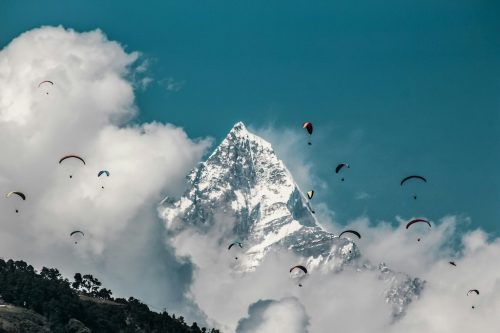
  • Spectacular close-up views of Machhapuchhre, Annapurna South, Annapurna I, Hiunchuli, and other elegant mountains in the Annapurna range.
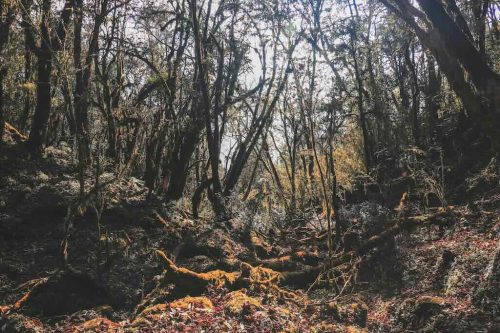
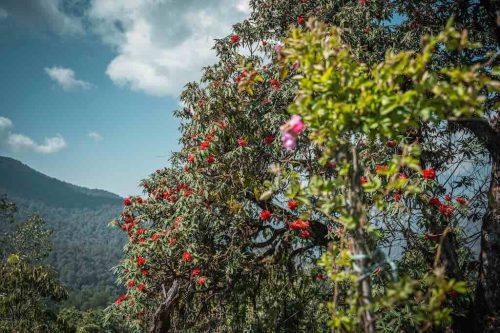
  • A serene walk through a magical rhododendron and oak forest, past charming Gurung hamlets with locals full of welcoming hospitality.
  • Mesmerizing sunrise and sunset over Annapurna and Machhapuchhre for most of the trek.
  • Ideal balance of solitude and high-altitude adventure, an adventure that’s peaceful and powerful.
  • Moderately difficult yet compact and full of unforgettable rewards.
  • Affluent tea houses and lodges with amazing meals and accommodation.

Day to Day Trek Itinerary

Expand all

Driving Hours

2 Hours

Trek Distance

6 km

Elevation

2,900 m

Trek Duration

4 Hours

You’ll meet the trek guide at the hotel’s lobby at 8 am.

After breakfast at the hotel, you’ll take a jeep drive to Sidhing. Sidhing is a beautiful hamlet, two hours away from Lakeside, Pokhara.

Upon reaching Sidhing, you’ll start the trek. Today, you’ll trek to Low Camp, entirely uphill from Sidhing.

With a steady-paced walk, you’ll ascend to Sidhing through the lush oak and rhododendron forest. The route is entirely through the lush forest, offering utmost serenity and natural connection.

You’ll stop for lunch after trekking for an hour from Sidhing. Or, you could trek to Low Camp for four hours and have lunch.

You’ll settle in at the best available tea house at Low Camp for overnight accommodation.

Overnight stay a tea house

Included standard meals (Breakfast + Lunch +Dinner)

Trek Distance

8.5 km

Elevation

3,540 meters

Trek Duration

5 Hours

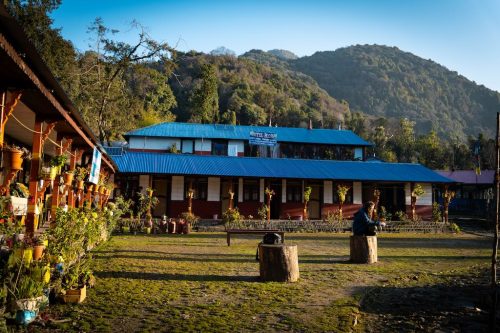
Nestled amidst the rhododendron forest with peeking Machhapuchhre, Low Camp is a serene place to wake up.

You’ll have breakfast at 8 and start the trek at 8:30 sharp.

A two-hour steady-paced walk from Low Camp is Badal Danda. What makes it amazing is the spectacular view of Annapurna South, Hiunchuli, and Machhapuchhre. The tea houses here sell fresh-roasted coffee beans, and sipping, viewing the amazing mountains can be a soothing experience.

The route winds up for two more hours to Mardi High Camp. The scenic route trails along the cliffs and ridges. It’s a beautiful walk between Badal Danda and High Camp.

You’ll have lunch at a tea house in High Camp. Moreover, you’ll settle in at the same tea house for overnight accommodation.

Depending on weather conditions, your trek guide might take you to Mardi High Camp for a sunset view.

Overnight stay at a tea house

Included standard meals (Breakfast + Lunch +Dinner)

Trek Distance

7 km

Elevation

4,200 meters

Trek Duration

5 Hours

Mardi View Point is an amazing vantage point in Mardi, offering a spectacular view of sunrise over Annapurna South and Hiunchuli. And sunrise viewing is a must on the Mardi Himal Trek.

It takes 2.5 hours to reach View Point from High Camp. Thus, for sunrise, you’ll start the hike at 3:30 am.

The route to the viewpoint is a steep uphill, where most of the trail is stone-paved. Moreover, the altitude is around 4,200 meters, making the walk tiring and demanding.

Upon reaching the viewpoint, you’ll get a spectacular view of Machhapuchhre, Annapurna South, and Hiunchuli. Also, you’ll see some amazing mountains like Annapurna I, Khangsar, and Gangapurna.

You’ll spend 2 hours at Mardi View Point, watching sunrise and the amazing mountain panorama.

For breakfast, you’ll return to the tea house in High Camp. And after breakfast, you’ll prepare for the short trek to Badal Danda.

From High Camp, Badal Danda is a short 1.5-hour trek away.

Upon reaching the tea house, you’ll settle in for lunch, dinner, and overnight accommodation.

Overnight at a tea house

Included standard meals (Breakfast + Lunch +Dinner)

Trek Distance

10 km

Elevation

1,565 meters

Trek Duration

6 hours

You’ll have your breakfast at 8 and start the trek to Landruk at 8:30, sharp.

Leaving Badal Danda, you’ll descend for an hour to Low Camp. Here, you’ll stop for a tea break and rehydration.

Descending two hours from Low Camp is Rest Camp, and another 30 minutes is Forest Camp. Here, you’ll stop for lunch.

After lunch at Forest Camp, you’ll resume the trek. Two hours of steady-paced walking from Forest Camp is to the Landruk village.

Landruk is an amazing Gurung hamlet. From here, you’ll get a spectacular view of Annapurna South and Hiunchuli.

You’ll settle in at the best available tea house for overnight accommodation.

Overnight at a tea house

Included standard meals (Breakfast + Lunch +Dinner)

Trek Distance

10 km

Elevation

2,170 meters

Trek Duration

5 hours

After breakfast at 8, you’ll start the trek to Chhomrong at 8:30, sharp.

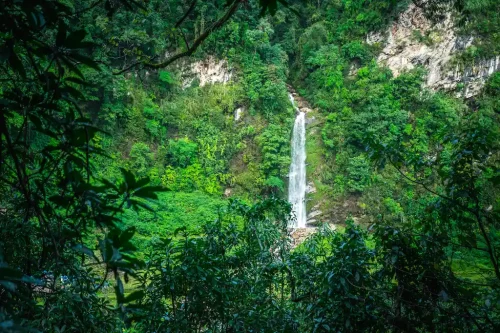
Leaving Landruk, you’ll descend to the Modi River, cross a suspension bridge, and ascend to New Bridge. From here, you’ll transition to the Annapurna Base Camp Trek route. Entirely from New Bridge to Samrong, you’ll walk through the oak and birch forest. The cascading Modi River, dancing waterfalls, and terrace farms are ones to watch.

Once you reach New Bridge, you’ll ascend to Samrong. Here, you’ll cross a long suspension bridge over Kimrong Khola and ascend to Jhinu Danda.

You’ll stop for lunch at a tea house in Jhinu Danda.

Chhomrongm from Jhinu Danda is an uphill, two-hour walk. And on a sunny day, it tires a lot. Thus, a slow-paced two hours of gradual walking sees you ascend to Chhomrong comfortably.

You’ll settle in at a tea house for dinner and overnight accommodation in Chhomrong. Here, you’ll get a tea house with an attached bathroom.

Overnight at Fishtail Lodge

Included standard meals (Breakfast + Lunch +Dinner)

Trek Distance

13 km

Elevation

2,700 meters

Trek Duration

6 hours

You’ll wake up with a spectacular view of Annapurna and Machhapuchhre.

The breakfast will be at 8 am and begin the trek at 8:30, sharp.

Leaving the tea house, you’ll descend to a river, cross a suspension bridge, and ascend to Sinuwa. One hour of walking past the suspension bridge takes you to Lower Sinuwa, and 45 minutes further to Upper Sinuwa. Past Upper Sinuwa, the route is less winding and more straightforward.

There are multiple photo spots between Upper Sinuwa and Bamboo, where you could stop for the photos.

1.5 hours of leaving Upper Sinuwa takes you to Bamboo. The route winds up for 1.5 hours to Dovan. You’ll stop at a tea house in Dovan for lunch.

A steady-paced, two-hour walk from Dovan is the Himalaya. But, before ascending to the Himalaya, you’ll stop at Pojengyem Temple and a waterfall. The humongous waterfall leaves you in awe.

A sharp ascent for 30 minutes takes you to the Himalaya. You’ll settle in at a tea house here for dinner and overnight accommodation.

Overnight at a tea house

Included standard meals (Breakfast + Lunch +Dinner)

Trek Distance

10 km

Elevation

4,130 meters

Trek Duration

6 hours

After breakfast at a tea house in the Himalaya, you’ll start the 6-hour trek to Annapurna Base Camp.

Right after Himalaya, the stone-paved route winds up for an hour to the big stone cave. The rushing Modi river and waterfalls entertain the walk till Deurali.

From here, you’ll trek for 30 minutes to Deurali. And from Deurali, you’ll trek two more hours to Machhapuchhre Base Camp. The route gets straightforward and easier after an hour of walking past Deurali. The walk becomes scenic with the view of Machhapuchhre and Gangapurna peaks.

Upon reaching Machhapuchhre Base Camp, you’ll stop at a tea house for lunch. You’ll have lunch with the spectacular sight of Annapurna South and Annapurna I.

After lunch, the slow-paced two-hour walk is to Annapurna Base Camp. For an hour, the route winds up and is tiring. However, once you reach the small pond, the route gets less sloppy. Also, you’ll feel the elevation, thin air, and quick fatigue after Machhapuchhre Base Camp. 

Before the tea houses is the base camp landmark icon, popular for photographs. With some celebrations and photographs, you’ll walk 5 minutes further to the tea house.

You’ll settle in Peaceful Lodge at Annapurna Base Camp.

Overnight at Peaceful Lodge

Included standard meals (Breakfast + Lunch +Dinner)

Trek Distance

16 km

Elevation

2,310 meters

Trek Duration

7 hours

Watching sunrise over the Annapurna mountains is among the must-do activities. And for this, you’ll wake up for the sunrise.

Trekkers gather at the viewpoint for sunrise viewing, which makes the morning at Annapurna Base Camp exciting. You’ll love the sunrise and overall vibe at the base camp.

After sunrise viewing, you’ll return to the tea house for breakfast. While you have breakfast, the trek guide and porter prepare for the return.

You’ll leave Annapurna Base Camp before 9 am.

You’ll trek to Machhapuchhre Base Camp, Deurali, and stop for lunch at Himalaya.

After lunch, you’ll descend to Upper Dovan, Lower Dovan, and to Bamboo.

Upon reaching Bamboo, you’ll settle in at a tea house for dinner and overnight accommodation.

Overnight at a tea house

Included standard meals (Breakfast + Lunch +Dinner)

Trek Distance

10 km

Elevation

1,780 meters

Trek Duration

6 hours

Bamboo to Jhinu is another beautiful trek day.

You’ll start the trek at 8:30 after breakfast at the tea house in Bamboo.

Two hours from Bamboo is Upper Sinuwa. From here, you’ll descend to Lower Sinuwa, to the river, cross a suspension bridge, and ascend to Chhomrong for 40 minutes.

You’ll stop at a tea house in Chhomrong for lunch.

After lunch, you’ll descend for an hour to Jhinu and call it a day off.

In the evening, you’ll visit Jhinu hot spring, a must-visit hot water pool. Soaking your body in the hot water offers amazing muscle relaxation and much-needed therapy.

You’ll get dinner after returning to the tea house from the hot water pool.

Overnight at the tea house in Jhinu Danda.

Overnight at a tea house

Included standard meals (Breakfast + Lunch +Dinner)

Trek Distance

6 km

Elevation

2,012 meters

Trek Duration

4 hours

Jhinu to Ghandruk is a short but amazing walk.

After breakfast at the tea house in Jhinu Danda, you’ll prepare for the 4-hour walk to Ghandruk.

The picturesque sight of Machhapuchhre, Annapurna South, and Hiunchuli leaves you in awe as you cross the suspension bridge at Samrong and ascend to Uri. Past Uri, the route gets straightforward, with most sections along the motor road.

Upon reaching Ghandruk, you’ll settle in at a tea house for lunch, dinner, and overnight accommodation.

Tip: The sunset from Ghandruk looks spectacular. Don’t miss it!

Overnight at a tea house

Included standard meals (Breakfast + Lunch +Dinner)

Drive Distance

57 km

Elevation

822 meters

Drive Duration

1.5 hours

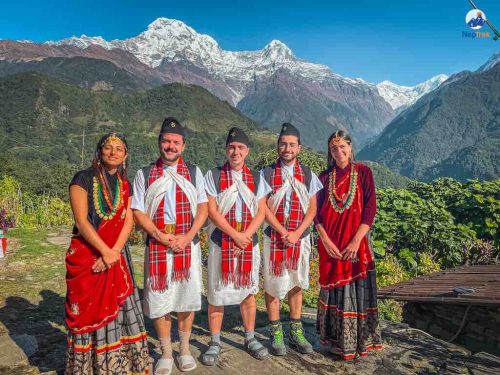
After sunrise viewing, you’ll have an amazing breakfast with a spectacular sunrise at Ghandruk. You can try wearing Gurung attire and get photographs, a way to immerse yourself in the Gurung culture and tradition.

You’ll spend a few more hours before leaving for Pokhara.

You’ll walk for 20 minutes to Bikashe Danda or the Ghandruk bus park for a jeep ride.

A 1.5-hour jeep ride takes you to the hotel in Lakeside, Pokhara.

With this, the amazing 11-day Mardi Himal Trek with Annapurna Base Camp comes to an end.

Overnight at Hotel Splendid View

Breakfast and Lunch

Trip Cost Details

Cost Includes

  • One night’s accommodation at a three-star hotel in Lakeside, Pokhara (twin sharing)
  • 11 breakfasts, 11 lunches, and 10 dinners at tea houses along the trek
  • Twin-sharing accommodation throughout the trek with attached bathrooms where available
  • Private jeep transportation between Pokhara–Sidhing and Ghandruk–Pokhara (for groups of at least five trekkers; smaller groups will use shared jeep services)
  • Annapurna Conservation Area Permit (ACAP)
  • Experienced, licensed trekking guide (number of guides depends on group size)
  • Porter service to carry trekker duffle bags (minimum of two trekkers required; porter service for solo trekkers available as an add-on)
  • Company-provided duffle bags for use throughout the trek
  • Basic first-aid support for minor injuries
  • Trek photos and videos as souvenirs (non-professional)

Cost Excludes

  • Personal expenses for amenities such as Wi-Fi, hot showers, bottled water, and hot drinking water
  • Any hot or cold beverages other than those mentioned in the Cost Includes section
  • Any additional meals not specified in the Cost Includes section
  • Additional accommodation in Pokhara
  • Travel insurance is not provided and must include emergency helicopter rescue and medical evacuation
  • Porter service is not included for solo trekkers (available at USD 200 for a 11-day trek)
  • Tips and gratuities for trekking guides and porters

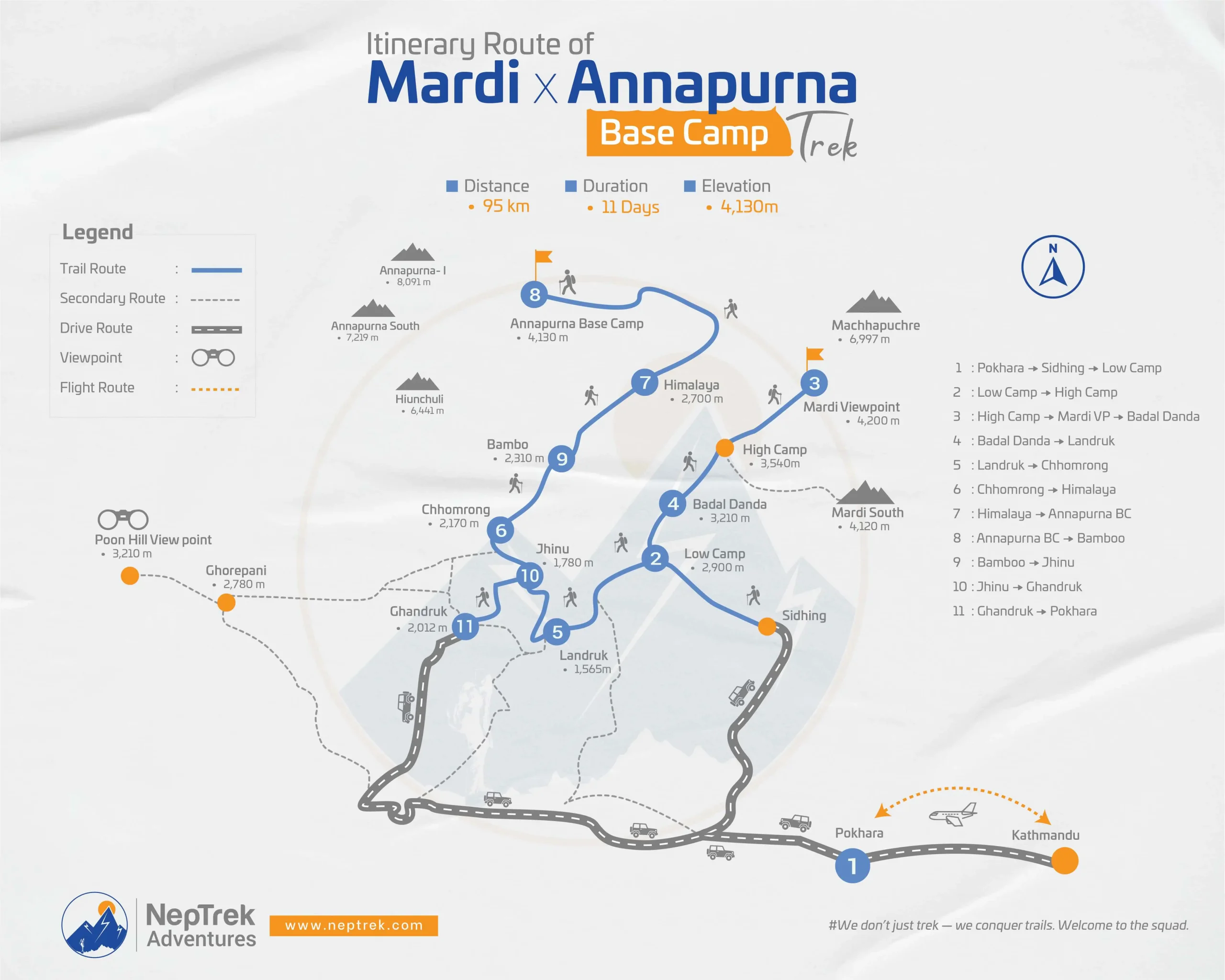
Trek Route Map

Trek Route Map

Trip Info

Arrivals and Airport Pickups

At NepTrek Adventures, we strive to make your arrival in Kathmandu hassle-free. Hence, upon your arrival, we’ll provide a complimentary airport pickup. To welcome you, we’ll have our representative at the arrival section with a NepTrek nameplate.

After welcoming you, our representative will transfer you to the hotel in a private vehicle. Here, you’ll meet with a trek guide/manager from NepTrek. Our manager briefs you about the trek.

Note: We strongly recommend that you travel at least 2 days before the trek’s starting date. Since this trek starts from Pokhara, you’ll have to travel from Kathmandu to Pokhara a day before the trek.

Where you’ll stay

The trek cost includes your one-night accommodation in Pokhara and 10 nights at the tea houses along the trek.

We’ll provide you with a three-star hotel with breakfast at Lakeside, Pokhara, for a night. The hotel room we provide will be a twin room. However, if you prefer a private single room, it’ll be subject to some add-ons.

Your accommodations along the trek will be at the tea houses. The tea houses provide twin-sharing rooms that are warm and hygienic. The availability of attached bathrooms is limited, as only a few tea houses have this service. Thus, we’ll provide rooms with attached bathrooms upon availability.

Meals on the go

We provide 11 breakfasts, 11 lunches, and 10 dinners during this trek.

The tea houses provide a meal menu for every meal. Thus, you can order any meals you want from the menu for each main course. Moreover, you can choose one hot drink at each meal, which is included in the trek cost.

We’d love to provide you with meals during your stay in Kathmandu and Pokhara. However, in these cities, you’ll have a handful of choices to visit cafes and restaurants to eat your favourite meal. Thus, the meals on Kathmandu and Pokhara stay aren’t included in the trek cost(Pokhara stay comes with breakfast).

Transportation

Here’s a list of transportation services included in the trek cost.

  • Airport pickup upon arrival in Kathmandu
  • Pokhara to Sidhing on a jeep (private/sharing- depends on the group size)
  • Ghandruk to Pokhara (private/sharing, depends on the group size)

As the trek starts from Pokhara, all our clients are required to travel to Pokhara a day before the trek’s departure. You’ll have the option to take a flight from Kathmandu to Pokhara or a tourist bus ride. Any means of transport you prefer, we’d be more than happy to assist you in booking these tickets with add-ons. However, the trek cost doesn’t cover transportation from Kathmandu to Pokhara and vice versa, unless specified.

Trek porters and luggage weight limit

We care about your convenience during the trek. Thus, to make your trek less demanding, we provide trek porter(s) to carry your backpacks. You’re eligible to assign an 8-9-kilogram backpack to your porter. We’ll provide waterproof duffel bags, where you can pack the gear and clothing for the trek.

Note: We assign a trek porter for a group of at least two or more trekkers, unless specified. For individual trekkers, we don’t provide porters. However, on add-ons, individual trekkers can hire a trek porter.

Travel Essentials

Visas

All travellers, except Indian and SAARC nationals, are required to obtain a Nepal Travel Visa. The Immigration Department at Kathmandu airport’s arrivals issues on-arrival visas. However, a few nationals must apply for a Nepal Travel visa before traveling to Nepal.

The process to get on-arrival visas is straightforward. You must fill on-arrival visa form and pay the visa fee.

Note: The trek cost doesn’t include a Nepal travel visa.

Travel Insurance

All our clients are required to purchase travel insurance before traveling to Nepal. Since the Mardi Himal Trek with Annapurna Base Camp is a high-altitude adventure, trekkers should purchase travel insurance including emergency helicopter evacuation. The highest elevation on this trek is 4,130 meters at Annapurna Base Camp. Thus, your travel insurance must include the helicopter rescue coverage up-to 4,200 meters elevation.

Travel insurance is a must, and you must provide us with proof of your insurance policy before departing for the trek.

Currency Exchange

You must exchange USD/EURO or any currency for Nepali rupees to pay your expenses in Nepal. All the exchange counters in Nepal are authorized for currency exchange. Moreover, the exchange will be as per the rate on the given day. You can exchange the money in Kathmandu or in Pokhara.

Personal Expenses

If you wish to consume services other than “Cost Includes”, you must pay as personal expenses. Your personal expenses include hot showers, hot drinking water, bottled water, soft drinks, WiFi, electricity recharge, additional meals, and so forth.

Trek Permits

You’ll need the Annapurna Conservation Area Project Permit for the Mardi Himal and Annapurna Base Camp Trek. Although it’s a combined trek, you can complete both treks with just one permit.

The trek cost includes the ACAP Permit. Hence, after you pay for the trip, we’ll buy this permit for you. However, for solo trekkers, obtaining this permit requires a visit to the permit-issuing office in Pokhara or Kathmandu.

For an in-depth guide and information related to the permit, read our Annapurna Trek Permit Blog.
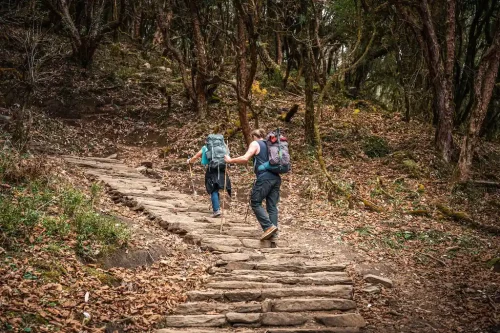
En route to Mardi Low Camp
En route to Mardi Low Camp (Image © NepTrek)

Mardi Himal and Annapurna Base Camp Trek Elevation

The highest elevation you’ll step in on the Mardi and Annapurna Base Camp Trek is 4,130 at Annapurna Base Camp. On the Mardi side, the View Point sits between 4,000 and 4,200 meters in elevation.

The trek starts from Pokhara, which is situated at an elevation of 822 meters.

Here’s a table to give you an idea of the elevation along this 11-day trek.

Landmark

Elevation

Pokhara

822 meters

Sidhing

1,700 meters

Low Camp

2,900 meters

Badal Danda

3,210 meters

Mardi High Camp

3,540 meters

View Point

4,200 meters

Landruk

1,565 meters

Chhomrong

2,170 meters

Himalaya

3,200 meters

Machhapuchhre Base Camp

3,700 meters

Annapurna Base Camp

4,130 meters

Bamboo

2,310 meters

Jhinu

1,780 meters

Ghandruk

2,012 meters

Best Time for Mardi and Annapurna Base Camp Trek

If you want to trek to Mardi Himal and Annapurna Base Camp, Spring and Autumn are the best times of the year. These are the amazing times of the year with picturesque mountain views, clear skies, and stable weather conditions.

Early Spring and late Autumn are colder with average daytime temperatures of 2-5˚C at the base camp and higher elevations. However, the later Spring and early Autumn are warmer with average daytime temperatures of 8-10˚C.

Other than Spring and Autumn, the winter months are also good times for this trek. With snowfall now occurring earlier in the spring, the winter months are typically dry and cold. Hence, with no snowfall, this trek is doable in January and February, provided you have warmer clothes and trekking gear.

If you’re trekking for mountain views, Summer isn’t the recommended time. However, the lush forest, green high-altitude landscape, warm temperatures, and occasional clear skies make the summer trek amazing.

A day on the trail

Every day on the trail for 11 days looks pretty much the same, itinerary-wise. You’ll wake up between 6:30 and 7 am. The breakfast will be between 7:30 and 8 am.

After breakfast, the trek starts. You’ll trek for 4 hours on average and stop for lunch. Lunchtime will be an hour long.

After lunch, you’ll trek for 3-4 hours to the stopping destination.

The dinner will be between 6:30 and 7:30 pm. After dinner, you’ll have a trek briefing session for 30 minutes.

You’ll go to sleep at 8 pm.

Trek Difficulty

11 days Mardi Himal Trek with the Annapurna Base Camp Trek is moderately difficult. What this means is that most regions on this combined adventure are comfortable and straightforward, with some parts being demanding.

The highest elevation on this trek is 4,130 meters, which isn’t an extreme elevation. Hence, with proper physical fitness, this trek is an absolute adventure for all adventurers, be it novice or seasoned.

Every day on the trail is a new challenge and reward, proving a unique Himalayan experience.

Who Can Join?

Embarking on an adventure is the best possible experience. Said this, not everyone should trek, and there’s a reason.

Is the Mardi and Annapurna Base Camp Trek right for you? Well, we can’t just say it’s for you. It depends on various factors in determining if this trek is ideal for you.

At NepTrek Adventures, we believe that trekking is for everyone, but not for:

  • Pregnant women after the first trimester
  • Senior citizens with health issues (Chronic)
  • People with hypertension, blood pressure, heart, and lung issues
  • Kids below 8 years of age

We have a detailed blog on why trekking isn’t for everyone. It’d be amazing if you read through the blog before embarking on this trek.

Trek Gears to Bring

Annapurna Base Camp Trek with Mardi Himal is an 11-day trek. Hence, the trek demands adequate quality gear and clothing.

Backpacking differs slightly regarding what to bring for the trek, which depends on the time of year you’re trekking. Said this, most of the backpack items remain the same throughout the year, no matter when you trek.

You’ll need warm clothes for the head and upper body with soft layers, thermals, and a down jacket. For the lower body, you’ll need warm trekking pants, layers, socks, and trek boots. Moreover, you need to bring travel documents, an insurance policy, snacks, gadgets, etc.

The good part of trekking with us, in a group of at least two or more trekkers, we provide trek porters. They’ll assist you in carrying the heavy backpacks, leaving you to carry the most essentials in a day pack.

For an in-depth guide on trek gears and clothing for this trek, we recommend you read our Annapurna Base Camp Trek Packing List blog. It has almost everything you need to know about the gears, clothes, and other essentials required for the trek.

How to prepare for the Annapurna and Mardi Himal Trek?

Trip bookings and backpacking are an amazing way to start preparing for the Annapurna and Mardi Himal Trek. However, the core trek preparations are the exercises to maintain physical fitness and mental readiness.

Physical fitness is an essential requirement for the adventure. Having adequate physical fitness provides a comfortable trek experience. However, with less or no physical fitness, trekkers strain their body parts extensively and expose themselves to the risk of altitude sickness and severe fatigue.

For physical fitness exercises, here are our top picks:

  • Treadmill or stair-master workout for an hour a day
  • Outdoor walk, hikes, running.
  • Cycling, swimming, yoga, and meditations

You must be mentally prepared for the trek. You’ll get tired, sunburnt, cold nights, chilly winds, humid days, etc. Moreover, you’ll be away from your comfort zone for 11 days. Thus, to enjoy every step of this adventure, you must be well prepared. Accept that you’re in the mountains where resources are pretty much limited, and you won’t have the comforts like you used to. Accepting this makes the adventure less overwhelming.

Mardi Himal and Annapurna Base Camp Trek Cost

The standard cost of the Mardi Himal and Annapurna Base Camp Trek is USD 999 for a solo/individual trekker. However, we do have amazing group discounts for those who’re planning this amazing adventure with family and friends.

The trek cost changes should you prefer customization on various scopes, from itinerary to ‘cost includes and excludes’. However, we encourage you to inform us about the upgrade or customizing the existing offering. Doing so, we’ll provide you with the most reasonable trek price.

Extend your adventure?

After your 11-day trek, you may want to relax and recharge. A humid Chitwan Jungle Safari Tour makes an ideal choice for post-trek relaxation.

Further, if you prefer to explore the cultural richness of ancient Nepal and history, you can tour the heritage sites in the Kathmandu Valley for a day or two. Moreover, to relax in the traditional Nepali hamlets, overnight at Bandipur can be a great choice.

Contact us now to extend your adventure. We’re ready to craft an amazing experience just for you.

Our Team

If there’s one word that describes our team, it’d be ‘AMAZING’. All our clients speak proudly of our hardworking, caring, and professional team.

We’re a team of experienced adventurers with years of trekking and guiding experience, all over Nepal. Our fantastic team boasts first aid responder certification, safety-driven trips, excellent communication, and years of guiding experience.

On your Mardi Himal and Annapurna Base Camp trek, an experienced trek guide and a friendly trek assistant (porter) will assist you. They’ll help you in creating an amazing trek experience in Annapurna.

Tipping to the Crew

Tipping the trek guide and porter is a meaningful way to express gratitude and acknowledge their effort in making your trip successful. 

Trekkers usually tip their guide and porter at the end of the trek in Pokhara. Be it in a group or individually, both are perfectly fine. The amount isn’t fixed as it depends on how satisfied you are with the effort and services the guides and porters made throughout the trek.

Trek FAQs

Expand all

General Information

Mardi Himal Trek is doable in 5 days from Pokhara, whereas Annapurna Base Camp Trek takes between 7 and 11 days. However, our precisely hand-picked itinerary is 11 days. In 11 days, you’ll complete this combined adventure in a single go.

On average, you’ll walk 10-12 km each day, taking 5-7 hours. However, there are some days when you’ll trek more or less than the average distance.

The entire route of Mardi and Annapurna Base Camp is scenic with mountains and lush forest. Moreover, the trekking routes aren’t difficult to walk on, ensuring less strain and more comfort.

Mardi Himal Trek became popular around COVID-19, and since then, it’s been trekkers’ favourite short adventure from Pokhara. Annapurna Base Camp Trek, on the other hand, is a commercial trek, popular since 90’s.

Combining these two treks, the itinerary provides the finest experience: the ridgelines of Mardi and the mountain’s amphitheatre of Annapurna. The 11-day itinerary is packed with spectacular mountain scenery, timeless culture, serene trails, and amazing vantage points, all at a steady pace.

Another reason for this trek being popular and rewarding is the trek’s difficulty. Despite being an 11-day adventure, this trek is an absolute favourite for novice trekkers. Any novice trekker with adequate physical fitness can embark on this trek and complete it comfortably.

The 11-day Mardi and Annapurna trek is an ideal adventure for novices. A novice adventurer with adequate physical fitness can embark and comfortably complete this trek. The perfectly divided walking, 11 days, natural acclimatization, and safe trails provide a comfortable trek experience. Moreover, guided by experienced trekking guides at NepTrek, novice adventurers will enjoy this trek to the fullest, with safety as a priority.

The Mardi and Annapurna Trek is way easier than any Everest region trek, including the Everest Base Camp Trek. The elevation along the trek makes a significant difference in trek difficulty, with Mardi and Annapurna having an edge over Everest. The highest elevation on Mardi and ABC is 4,130-4,200 meters, whereas it’s 5,345-5,645 meters in the Everest Trek. Moreover, the trekking terrain in Annapurna is gentle and less rugged, a sharp contrast with that on Everest.

Absolutely. Mardi and Annapurna Base Camp are comfortable and low-elevation treks that are doable for anyone with adequate physical fitness. Annapurna Circuit Trek isn’t an easy trek to embark on. Although the novice trekkers can embark on it, the trek demands some high-elevation trek experience.

Annapurna Base Camp, with Mardi Himal, offers an amazing natural, cultural, and scenic experience. Annapurna Circuit is more adventurous, rugged, and involves high mountain passes, such as Thorong La Pass.

Mardi and ABC Trek are popular, safest, and well-established in the Annapurna Conservation Area. Whether you’re a solo, female adventurer or trekking in a group, the trek is safe. Upon hiring a local trekking agency like us, our team offers the utmost trek experience. We practice strict safety standards, including weather monitoring, altitude monitoring, hydration reminders, and precise pacing. We put our clients in the best available tea house, accessible emergency support, and smooth communication networks.

Absolutely. A private trek to Mardi and Annapurna is an exciting and amazing way to explore the best of Annapurna Sanctuary. It allows you the ultimate flexibility, privacy, and a sense of deeper connection to the culture and nature. It gives you the freedom to customize the itinerary, extend the trip, hire experienced guides and porters, etc.

At NepTrek, we offer private trekking for an individual or a group of family and friends.

Here are some benefits of private trekking:

– Set your own pace for the trek
– Customize the itinerary and day-by-day plans
– Explore more about the culture, people, and nature
– Spend more time on viewpoints, photo stops, and rest stops
– Sole attention to safety and comfort
– Personal time in nature

Trek Bookings and Cancellations

We recommend you book this trek as early as possible to avoid a last-minute rush. Most of our clients book their trek at least 4 months in advance. The adequate time from trek bookings to trek start provides them with ample period for trek preparation.

If you want to reserve the 9 days of Tilicho Lake Trek with us, we recommend at least two months in advance. With this, we’ll get adequate preparation time to allocate trek guides, reserve the tea houses, process the trek permits, and more.

However, at times, trekkers make last-minute bookings. Usually, trekkers in Nepal make last-minute bookings.

Our suggestion: Booking the trek at least two months before the desired start date allows ample time for both you and us to prepare for the trek.

We want you to be 100% sure about embarking on this trek before proceeding with the trek booking. Once you send the confirmation fee and decide to cancel the trek, you’ll be subjected to our refund and cancelation policy.

Once you find this trek right for you, you can proceed to book this trek with us. For this, you must contact us. You can email us at mailtoneptrek@gmail.com or send an instant message on WhatsApp (+977-9818553880).

Once you contact us, you’ll get the necessary trek booking information. Moreover, you can request itinerary customization, add-ons, if any, personal preferences, trek cost and details, and more.

And with all things clear, you can proceed to book the trek. We’ll send you our bank account details for the trip confirmation payment.

The advance trek booking confirmation fee is 50% of the total trek cost.

To book your spot on 11 days of Mardi Himal and Annapurna Base Camp Trek, you must deposit at least USD 500 (unless specified).

We use advanced trek confirmation payment to purchase trek permits, reserve the tea houses along the trek, appoint a trek guide, manage transportation, and more.

After paying this amount, you’ll get a confirmation email or message regarding the payment.

We respect your trek cancelation decision. However, we have a refund policy regarding the trek cancelation. We hope you’ll be clear with our policy listed below.

–  50% refund on confirmation payment upon canceling the trek a month before
–  25% refund on confirmation payment upon canceling the trek a week before
–  No refund on confirmation payment upon canceling the trek within a week of the trek
–  No refund on confirmation payment upon canceling the trek after starting it for reasons

Note: The deductions include the administrative fees, hotel reservations, and trekking permits (if we purchase before you cancel the trek).

Arrivals and Visas

We recommend you arrive in Nepal at least 48 hours prior to the trek’s starting date. Arriving early gives you adequate time for trek preparation, understanding Nepali culture, getting to know your trek guide, and visiting the best heritage sites in Kathmandu. Moreover, you can buy the trekking gear at the local shops if you intend to buy it in Kathmandu.

Moreover, this trek starts from Pokhara, which requires trekkers to travel to Pokhara a day before the trek.

Thus, to avoid the last-minute rush, it’s better to arrive at least two to three days before the trek.

Nepal gives a visa-on-arrival for most nationals. The Immigration Department at Kathmandu Airport issues an on-arrival visa. Hence, you must fill out the required forms at the booths provided at the airport.

To learn more about the Nepal on-arrival visa, we recommend you visit this blog. Or, you can refer to the Department of Immigration’s official website for authentic information regarding the Nepal visa.

Absolutely. We provide an airport pickup service on your arrival in Kathmandu. For timely pickup, we suggest providing your travel tickets prior to the flight.

Our team member will be at the airport’s arrival, waiting to welcome you to Nepal. Our team member takes care of your luggage and transfers you to the hotel in a private vehicle. This ensures a smooth and hassle-free start to your adventure in Nepal.

Transportation

Our 11-day Mardi and ABC Trek starts from Pokhara. Hence, all our clients must travel to Pokhara at least a day before the trek departure.

Getting to Pokhara is convenient, as you have options to take a flight or a tourist bus. Oftentimes, our trek guide leads groups from Kathmandu. But on most occasions, you’ll meet the trek crew at the hotel in Pokhara.

Our associates in Kathmandu will assist you in getting to Pokhara by flight or bus, with add-ons for the respective commute.

No. Mardi Himal Trek with Annapurna Base Camp Trek cost doesn’t include the transportation from Kathmandu to Pokhara (flight/overland). It’s an 11-day itinerary from Pokhara, and thus, the trek cost covers your expenses only for the 11 days.

However, if you want us to organize the flights or tourist bus ticket for you, they’ll be subject to add-ons. Alternatively, if you would like us to include Kathmandu-Pokhara transportation, we’ll provide you with an updated trip quote.

Please let us know your preference while booking this trek.

To get to the trailhead and back to/from Pokhara, we use local and private jeeps. We use local shared jeeps for smaller groups of trekkers (2-3 pax). However, private jeeps are provided for a group of at least 4 or more trekkers.

The road to the trailhead is a mix of blacktop and off-road. Thus, the jeeps we use are comfortable and reliable on such terrain. It’ll be bouncy at times, but it ensures a safe and relaxed transfer.

You’ll get an airport pickup upon arrival in Kathmandu. It’s a complimentary service from us.

However, we don’t provide:

–  Airport pickup and drop in Pokhara
–  Transfer to/from the hotel from/to the tourist bus park in Pokhara.
–  Airport drop in Kathmandu

However, these services are available as add-ons.

The weather conditions make a significant impact on the overall trek experience. Getting to the trailhead in a jeep can get tricky due to landslides during or late Summer. Moreover, the scheduled constructions can halt traffic for hours or even for a week. Thus, at such times, our team rearranges the schedule and plans the trip with alternative options. We may need to customize the itinerary and adapt to the trip plan whenever needed.

Absolutely. The jeep ride to/from the trek trailhead is safe, comfortable, and reliable. We work with the most experienced drivers with reliable vehicles. Moreover, the local jeep drivers drive on the track almost every day, boasting extensive experience.

Recent upgrades of the road have enhanced the overall safety and comfort of the jeep rides.

Absolutely. We take care of our clients even after completing their trip with us. To make our clients’ transfer easier and hassle-free, we arrange the transportation services. Whether you’re returning to Kathmandu by flight or overland or extending your trip to the next destination, we’ve got your back. All our post-trip transportation services are available as add-ons, giving you full flexibility.

Accommodation and Meals

Your stay throughout the trek will be at the lodges and tea houses. They offer basic to standard twin-sharing rooms with attached bathrooms (limited places) and hot showers (everywhere).

Here’s how the tea houses are on the route:

–  On the Mardi Himal route, the tea houses provide basic accommodation with no attached toilets.
–  On the ABC route, tea houses provide standard accommodation with attached bathrooms (at some places)

Overall, you’ll find the tea house accommodation comfortable, cosy, hygienic, and warm.

Yes. Gas-heated hot showers are available at every tea house on the trek.

–  A few tea houses on Mardi High Camp may not provide hot showers.
–  Every tea house on the Annapurna Base Camp Trek route provides a hot shower, from Jhinu till the base camp.

Note: The trek cost doesn’t include the hot shower. Hence, the trekkers are required to pay for the hot shower. It usually costs USD 4-5.

Yes. Your accommodations in Landruk, Chhomrong, Jhinu, and Ghandruk come with an attached bathroom.

Attached bathrooms are available at the tea houses, but not everywhere. Due to local regulations and limitations, tea houses in Chhomrong and lower regions provide attached bathrooms. On the Mardi side, no tea houses provide attached bathrooms.

All the tea houses provide WiFi services to the trekkers for a small fee of USD 2-3.

The WiFi works perfectly in Mardi and Annapurna with no interruptions.

Also, with the recent installation of mobile network towers, trekkers can now enjoy cellular data, even at the higher elevations. However, the weather conditions often create a patchy reception of internet signals.

We suggest that you notify your trek guide before purchasing the WiFi services at the tea houses.

Yes. Tea houses allow trekkers to charge their mobile devices on certain fee.

You’ll be able to charge your mobile devices and gadgets up to Deurali in the Annapurna Base Camp route and High Camp in Mardi. However, the availability of charging depends on the weather conditions (for solar-powered).

Instead of charging your devices every day and paying at the tea house, we suggest you bring a power bank. A 20-30k mAh power bank saves you some money and also can charge whenever required.

During 11-days Mardi-Annapurna trek, you’ll get 11 breakfasts, 11 lunches, and 10 dinners at the tea houses. They’ll be hygienic, nutritious, and freshly prepared.

Every tea house serves a meal menu with a variety of choices. Here’s an overview of what you can expect:

–  Breakfast (Toast, omelette, honey, butter, muesli with fruits, oatmeal, tea, coffee, etc.)
–  Lunch & Dinner (Western meals like pizza, burgers, noodles, fried rice, Nepali Dal Bhat, dumplings, Sherpa stew, bread, soup, pasta, porridge, pancakes, etc.)

Since the tea houses in the Annapurna Base Camp Trek route are more sophisticated, you’ll get plenty of meal choices. Mardi, on the other hand, provides a simpler meal menu and choices.

Absolutely. Being a vegetarian is not a problem during the trek. We even suggest that our clients not eat meat during the trek for health and digestive reasons.

The tea house’s meal menu has more vegetarian meal options than those with meat. From fresh vegetables to main courses, you’ll enjoy the vegetarian meals throughout the trek.

We’d be more than happy to guide you through the meal choices if you want to learn more about them.

You’ll be provided with safe drinking water throughout the trek. You have two choices: buy bottled water or pay less for filtered water.

The tea houses in Mardi sell bottled water all the way to High Camp. Annapurna, on the other hand, allows tea houses from Sinuwa to sell bottled water. However, after this, trekkers rely on filtered water, for which tea houses charge a minimal fee.

We suggest you use water purification tablets for additional water safety.

Trek Preparations & Fitness

A proper physical fitness level is a must for the Mardi and Annapurna Base Camp Trek. Although the trek is moderately difficult, it’s an 11-day trek, and every day’s average walking distance is 12 km, for 5-7 hours. Hence, proper physical fitness ensures a comfortable walking experience, minimizing the strain.

Mardi has steeper ascents, whereas Annapurna has longer and gradual climbs, mostly on stone-paved trails. And to conquer this trail, one must be in proper physical shape.

Prior trekking experience is a plus, but not mandatory.

It’s a moderate-grade trek with very few demanding sections. Moreover, the highest elevation on the trek is 4,130-4200 meters, which isn’t an extreme elevation. Thus, an active trekker with decent physical fitness can comfortably complete this trek.

To make the trek even for each day, our experienced trek guide sets a comfortable pace, follows the itinerary, prioritizes safety throughout, etc. On top, our amazing support staff(s) help with luggage and backpacks so that you can trek light.

Yes. Children and the elderly can join this trek. But, for this, we have our policies.

Children have to be aged 8 or above. Other trekking companies often accept clients aged 5-6 years. However, we don’t accept children below 8 years old.
Elderly travellers, below 70 years old, with decent physical conditions. Any existing illness or health issues put the elderly at risk.

Not really. You’ll feel the elevation, thin air, and fatigue. However, you’ll barely get altitude sickness.

This 11-day trek provides natural acclimatization as you continue trekking. You don’t need to stop for a day at some places for rest and acclimatization. You’ll trek gradually, sleep well, eat, and rehydrate adequately. Moreover, our trek guide monitors your health every 12 hours, reminds you of hydration, and prioritizes your health safety.

A two-month preparation plan works perfectly for physical fitness. Here’s what we recommend:

– Regular hiking or long walks (8–12 km / 5–7 miles)
– Stair climbing to simulate uphill terrain.
– Cardio exercises (running, cycling, swimming)
– Leg strengthening (squats, lunges)
– Core and balance workouts

Remember, you’re building strength, not muscle. Thus, consistent training for at least two months keeps you in perfect physical shape.

Expect to trek for 5-7 hours per day, covering 12-14 km on average. The trek starts at 8:30 sharp and ends around 5 pm.

Here’s a breakdown of the route and terrain along the trek:

–  Through oak, birch, and rhododendron forest mostly
–  Stone-paved stairs (almost 50% of the the Annapurna Base Camp route)
–  Ridgeline trail (Badal Danda-High Camp-View Point in Mardi)
–  Occasional sharp ascents and descents (Chhomrong, Siddhing-Low Camp, Bamboo-Sinuwa)

Together, the terrain offers an amazing experience, testing you to your limits and also offering comfortable walks.

If you want to carry your backpack, it’s completely fine for us. Usually, trekkers love to trek with their backpack to experience the sense of adventure. However, for some, carrying a heavy backpack could be tiring. Thus, for them, we provide support staff (trek porter), who’ll carry the backpacks.

A trek porter carries 8-9 kilograms of your backpack throughout the trek. With this, you can carry a lighter daypack with essentials, such as a water bottle, jacket, sunscreen, snacks, and gadgets.

Trekking with a lighter backpack provides comfort and lets you enjoy the walk without straining your muscles.

Health and Trek Safety

Absolutely. Mardi and Annapurna Base Camp are among the most trekked, safe, and welcoming trekking routes in Nepal. As a female trekker, you’ll be safe throughout the trek.

At NepTrek Adventures, we prioritize safety above all else. For female trekkers, we often employ our most experienced female guides, who are vetted, respectful, and adept at handling any situations. Our tea houses along the route are family-run, with a reputation for safety and comfort. Moreover, our trekking crew and administration remain in regular communication, detailing each day’s route.

Absolutely. Your safety is our main priority throughout the trek. Every decision we make during the trek keeps your safety at the center. We believe in safety-first principles, from creating amazing personalized experiences, guided by our profoundly experienced trek crews.

Pre-trek briefings, evening feedback sessions, health monitoring, proper route planning, and emergency readiness are the essential elements we always focus on. With this, we strive to make your adventure inspiring and secure.

Based on our history, none of our past clients have experienced any signs of altitude sickness while doing Mardi and Annapurna Base Camp. Thus, we believe that you’ll complete this trek without any altitude issues.

Said this, everyone can have a different build and experience with altitude. Some trekkers often experience mild headaches, nausea, and vomiting. These are the common signs of altitude sickness.

To reduce the risk of altitude sickness, our itinerary provides a perfect pacing with natural acclimatization. The reason we do Mardi first is to acclimate properly before embarking on the Annapurna Base Camp Trek. After completing Mardi, your body adjusts to the elevation, lowering the risk of altitude sickness.

If our clients get altitude sickness, we follow a standard set of health safety standards.

– Health monitoring (O2 saturation and symptoms review, from Day-1)
– Immediate descent (on severe symptoms)
– Gradual walking pace & rehydration reminders
– Altitude medications (acetazolamide)
– Emergency helicopter evacuation coordination (backed by your travel insurance)

Our guides are first aid responders. Thus, they’re self sufficient on minor first aid and illness management.

Yes. Travel insurance is mandatory for this trek. It provides you with additional safety and benefits during emergency situations during the trek. You’ll get emergency helicopter evacuation, medical treatment at the hospital, and other emergency support, all covered by the insurance.

On your 11-day Mardi and Annapurna Base Camp Trek, the maximum elevation you’ll reach is 4,200 meters. Thus, you should get a travel insurance with helicopter search and rescue upto 4,200 meters elevation.

Should you need help finding an insurance policy, we’re more than happy to assist you.

We follow immediate action after assessing the situation.

– Assess and stabilize the client’s condition
– Begin a safe and controlled descent if necessary
– Communicate with our support team in Kathmandu and Pokhara
– Arrange helicopter evacuation asap (backed by your travel insurance)
– Coordinate with hospital care

We strive to do our best to arrange everything in place so that nothing worse happens during the emergency.

Yes. Our guides carry a well-equipped first-aid kit during the trek. Our guides are first aid responders and handle minor injuries, altitude issues, gastrointestinal discomfort, sprains, headaches, and more. Some tea houses along the trek also provide basic first-aid kits and support whenever needed.

We also recommend that you bring personal medications and a personal first-aid kit.

The severity of medical conditions determines whether you can trek or not. On top of that, your physical fitness level and your doctor’s advice also matter a lot.

The Mardi and Annapurna Base Camp Trek is 11 days, which is a long duration. Moreover, the trek involves long walking days at higher elevations over uneven terrain. For people with physical issues, this can put them at risk.

Thus, if you have manageable physical issues, let us know. We’ll customize the itinerary, pace, support, and health monitoring. However, if you have chronic health issues and a history of altitude sickness or other problems, it’d be best not to embark on this adventure.

Trek Guides and Porters

Guides at NepTrek have years of high-altitude guiding experience, a deep understanding of the mountain, people, culture, a safety-first approach, and welcoming hospitality. We don’t just assign the guides based on availability. Our approach to selecting guides depends on the group sizes and trekking region. We employ the region-specific trek guides so that our clients can have an amazing trek experience. Once you embark on the route, you’ll find our guide as a companion, a leader, and a support system to rely on throughout the trek.

Absolutely. Our guides are Nepal government-licensed, leading every trek at NepTrek Adventures with due diligence. The licensed trek guide has completed the mandatory trekking guide license training course and other certifications, such as first-aid responder certification. Moreover, our guides are expert navigators and practice responsible tourism.

Your trek safety is our top priority. Hence, we only employ a full-time, licensed trek guide.

Most of our guides have over five years of experience, leading groups in Annapurna, Everest, and around most trekking destinations in Nepal. Their extensive trek experience comes in handy on the trails, tea house bookings, weather patterns, and mountain conditions.

Our guides are very friendly and respect every client. They have experience of guiding individual, big groups, female trekkers, couples on honeymoon, and families, across various altitudes and time of the year.

Yes. All our trek guides speak fluent English, making communication easier and more comfortable throughout your trek. Even our trek porters speak fluent English more fluently than most guides from other agencies.

Our guides communicates about the mountain conditions, trek briefings and plans for the day, cultural insights, safety protocols, and response to your queries in the best possible way.

Yes. Trek porters (support staff) are available and highly recommended. The 11-day trek involves significant elevation changes, terrain, long distances, and lengthy walking hours. Thus, to reduce fatigue and achieve proper natural acclimatization, trekking light is a must. For this, we provide trek porters to our clients.

We provide a trek porter for a group of two or more trekkers. However, for individual trekkers, the trek cost doesn’t include the trek porter and is only available as an add-on.

Our porters carry 18-20 kilos during the trek, shared between two trekkers. While most trekking agencies  make porters carry 35-40 kilos, we strictly allocate them carry an 8-10 kg backpack per trekker. This ensures a safe workload and less strain on them.

We follow the trek porter welfare, meals, accommodation, and backpack weight limits.

We’ll provide you with a waterproof duffel bag to keep your gear and clothes.

Our guides and porters depend on the group size. Here’s how we maintain the guide-client and clients-porter ratio.

– 1 experienced, licensed trek guide for a group of 6 trekkers.
– 1 experienced, licensed trek guide and licensed assistant guide for a group of more than 6 trekkers.
– 1 porter for every two trekkers

Solo trekkers get an experienced guide. However, hiring a trek porter subjects it to add-ons.

Yes. Most of our senior trek guides and leaders are Wilderness First Aid trained and certified. Moreover, they are efficient in altitude sickness management, handling injuries, CPR, and safe evacuation techniques.

Our trek guides carry a well-stocked first aid kit and are trained to use it in emergencies. Moreover, they participate in refresher training, keeping them upto date with the safety standards.

Guides are more than just the trek leaders. They do:

– Monitor your health and rehydration
– Set pace, timing, and trek safety
– Arrangements of meals and accommodations at the tea houses
– Trek briefings every day
– Encouragement and support to trekkers
– Coordinate with the team in Kathmandu about the daily trek progress
– Gap the bridge, interpret culture and local life

Throughout the journey, your trek guide becomes your friend and biggest cheerleader, motivating you on every step.

Tipping is a culture that has long been standing in the Nepali trekking scene. Trekkers find it a meaningful way to appreciate the hardwork put on by the guides and porters, making their trip successful.

Tipping can be done individually or in a group. Exceptional services by the crew deserve a little extra. However, it’s always at your discretion.

Backpacking & Gear

For the 11-day Mardi Himal and Annapurna Base Camp Trek, you’ll need a daypack and a duffel bag.

–  We’ll provide you with a duffel bag to put most of your clothes and trek gears, which the trek porter carries throughout the trek.
– You need to carry 30-litres daypack for essential items like a water bottle, soft shells, jacket, snacks, sunscreen, etc.

Ensure that your daypack has ample airspace, a padded back, a rain cover, and rigid straps.

Yes. We’ll provide a trek porter to help you carry the main backpack throughout the trek. We’ll provide you with a company duffel bag you can use as your main backpack. With most of the items carried by a trek porter, you can trek comfortably with a lighter daypack. For many, this is the preferred way of completing the Annapurna region trek.

11-day Mardi with Annapurna Base Camp Trek involves multiple climatic zones, from warm lowlands to chilly mid-hills and freezing higher elevations. Thus, layering is a must for various weather throughout the trek.

Here’s what we recommend you bring for the trek:

– Base layers (moisture-wicking, lower and upper body)
– Warm fleece or down jacket
– Windproof and waterproof shells
– Quick-drying t-shirts and trekking pants
– Thermal inner layers (for higher elevations)
– Neck buff, beanie, gloves
– Moisture-wicking socks
– A pair of comfortable trekking boots

For a complete packing list, please visit Annapurna Base Camp Trek Packing List. It has everything you need to know about backpacking, gear, and clothes.

You need a reliable, comfortable, and proper trekking boot for this trek. Since it’s a lengthier trek, your trekking boots must be comfortable and reliable. We suggest you bring a pair of mid-ankle, waterproof boots with a proper grip.

The trekking trail is a mix of rugged, stone-paved, off-road, and forest; broken-in boots are a must for safety and comfort. We recommend you put on worn-out boots instead of brand-new ones, as your feet take a few days to adjust to the new boots’ performance.

Yes. You’ll need a sleeping bag for the trek.

The tea houses provide blankets that might not be sufficiently warm at higher elevations during cold months. Thus, to keep yourself warm, we recommend a -15˚C rated sleeping bag.

It’d be best if you bring a personal sleeping bag for size fit and personal hygiene. However, if you wish to rent, we’ll be happy to help you with that. Our trusted trekking gear shop in Kathmandu rents amazing sleeping bags that are clean and warm.

Absolutely. If you’re a first-time trekker or prefer renting gear instead of buying, that’s completely fine. There are some great gear rental shops in Kathmandu and Pokhara.

Here’s what we recommend you rent for this 11-day Mardi and Annapurna Base Camp Trek.

– Sleeping bag
– Down jacket
– Trekking poles
– Trekking boots
– Micro spikes/crampons (for snow)
– Headlamps and other accessories

For thermal layers, base layers, fleece, and shells, we recommend bringing your own personal items instead of renting, for hygiene and a better fit.

Absolutely. Once you confirm the trek, we’ll provide you with a detailed packing list for the trek. Our packing list features the clothes and gear you’ll need for different seasons. Moreover, if you need one-on-one guidance, our team supports that too.

For a comprehensive packing list, we have a blog on the packing list for the Annapurna Base Camp Trek. It’d be amazing if you went through our well-crafted blog, curated exclusively for travellers.

Weather, Temperature, and Best Time

The best times of the year to trek to Mardi Himal and Annapurna Base Camp are Spring and Autumn. Trekkers often trek in Summer and Winter. However, with rainy days in Summer and cold days in Winter, the trek experience won’t be perfect.

Here’s what the Spring days offer:

– Stable weather and mild temperature
– Rhododendron blossoms in March and April
– Clear skies all day, offering some spectacular mountain views
– Absolute time to trek for novice trekkers

Autumn days are great as they offer:

– Crystal clear weather with dry trails
– Spectacular views of Annapurna and Machhapuchhre, all day long
– Mild daytime temperature, perfect for long walks
– Absolute time for landscape photography

April and November are the best months of the year for this trek.

The weather depends on what time of the year you trek to Mardi and Annapurna Base Camp.

If you trek in Spring and Autumn, the mornings are usually chilly and clear. Afternoons often get cloudy and foggy at higher elevations. The evenings get magical with sunset colors, a bit chilly, and cold nights.

On average, the daytime temperature at lower elevations is 15-25˚C, and the nighttime temperature is 8-15˚C. The higher elevations remain cold, chilly, and freezing in different seasons. For example, the early Spring/late Autumn days at higher elevations are cold with an average daytime temperature of 8-10˚C. The nighttime temperature falls below freezing, between 0˚C and -5˚C. Early Autumn and later Spring are warmer with an average temperature of 10-12˚C.

Despite being in the same region with similar topography, on a given day, the weather at Mardi is slight different than in Annapurna.

Mardi High Camp, View Point, and Base Camp are windy on the ridges and thus, are colder due to exposure. Annapurna Base Camp is surrounded by mountains from almost all sides. Due to this, you’ll experience the lesser cold blow effect. However, the nights at base camp get colder.

The snowfall at both places happens around the same time of the year. Also, trekking to both regions requires warm layers and proper trekking gear.

Absolutely. The weather on a given day can influence the trek itinerary, with safety as the priority.

Here are some factors that affect the itinerary or trek duration:

– Heavy rain
– Heavy snowfall
– Alternative trekking route from Deurali to ABC
– Acclimatization stop

Off-season times are when the weather creates problems. For example, the summer rain often washes away the wooden bridges with few landslides. Moreover, the winter snowfall blocks the route entirely and often forces the avalanches (frozen waterfalls).

The itinerary adjustments will be shorter walking on heavy rains and snow, alternative trek routes on landslides, and additional rest days.

Yes. Microspikes are highly recommended for use in snow conditions. How would you know if it has snowed on the mountains, or not? Well, our trek guide figures out that way before you start the trek from Pokhara. We reach out to the tea houses along the route to learn the recent conditions of the route with snow.

When does it snow? Well, snowfall in recent years has been delayed from late February to early April. Thus, if you’re trekking to Mardi and Annapurna in these months, microspikes are highly recommended.

Other than microspikes, you’ll need:

– Trekking poles
– Insulated layers and down jackets
– Wind and waterproof outer shell
– Warm sleeping bag (-20˚C rated)

The Mardi and Annapurna Base Camp Trek is doable all year round. However, for the best experience, Spring and Autumn are the best times.

But, if you’re trekking here in the off-season (not-recommended time), be ready to expect:

Summer (June-August)

– Heavy rain, slippery trails
– Leeches and bugs at lower elevations
– Cloudy and foggy skies, with limited to no mountain views at all
– Risk of landslides and weather delays

Winter (December-February)

– Extremely cold nights with freezing mornings and evenings
– Snow-covered trails
– Frozen waterfalls and avalanches risk
– Temporary route closures or alternate longer routes

Yes. Mardi Himal Trek with Annapurna Base Camp is doable throughout the year. However, the trek experience varies with each season, with an amazing experience guaranteed in Spring and Autumn. These months offer comfort, safety, and an unmatched viewing experience. However, trekking here in Summer can get overwhelming with rain, leeches, bugs, and no mountain views. Moreover, winter trekking can get challenging with cold, snowfall, and proper equipments.

From Our Guests
Unforgettable journeys, told by those who lived them!

11 Days
USD 849PP
Group-Size Discounts
**Discounts are solely based on your group size. We do not add anyone to your group.

Talk to an Expert

Kiran Neupane
Saroj Dahal

Connect with our expert for tailored itineraries or schedule a virtual consultation to get more insights.

REACH ON WHATSAPP
Speak to an Expert