


Arrivals and Airport Pickup
NepTrek values your comfort, and hence, for hassle-free transfer, we’ll provide you with a welcome greeting and airport-hotel transfer.
Our representative will be at the airport to welcome you in Kathmandu. Following, you’ll have a hotel transfer in a private vehicle or a taxi. You’ll be accommodated in a boutique hotel in Kathmandu, which is included in the trek package.
After the check-ins at the hotel, you’ll have a trek briefing session. Our manager or a trek guide will brief you on various elements of the trek, from safety, trek gear, and the itinerary plan. This ensures that everything’s in place perfectly before starting the trek.
Most trekkers prefer buying some trekking gear at the trek gear shops in Thamel. If you’re planning the same, our guide will assist you in buying/renting some trekking gear.
Where You’ll Stay
Your Langtang Gosaikunda Trek includes a variety of accommodations. Here’s how your accommodations during this tour are distributed.
- A boutique hotel with a twin room in Kathmandu for a night
- Tea houses and lodges on the trek for 8 nights
The trek package includes one night’s stay at the boutique hotel in Kathmandu. This accommodation gives you a much-needed rest and comfort after a long international flight and arrival.
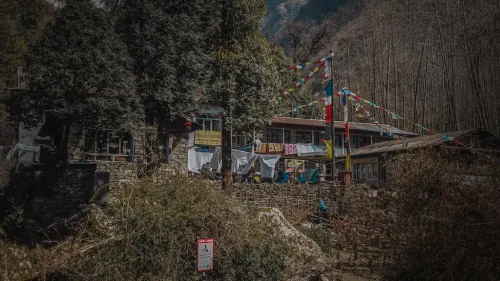
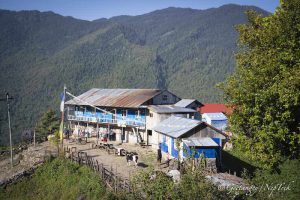
On the trek are the tea houses where you’ll stay. At some places, you’ll get a twin room with an attached bathroom, and at some, a twin room with a shared toilet.
The tea houses in Langtang are well-established and provide amazing hospitality. Particularly, in Langtang Village, Kyanjin Gompa, and Thulo Syabru, you’ll get a twin room with an attached bathroom. However, you’ll get a decent room at Lama Hotel and Lauribinayak. Nevertheless, the tea houses provide comfortable overnight accommodations.
Meals on the Go
Here’s a breakdown of the meals you’ll get during these 9 days of the Langtang Valley and Gosaikunda Trek.
- Breakfast is provided at your Kathmandu accommodation
- 9 breakfasts, 9 lunches, and 8 dinners at the tea houses/lodges on the trek
Each main course includes a meal of choice from the menu. You’ll get a meal menu at the tea houses for every meal. Also, you’ll get a warm drink with each meal, included in the trek cost.
What the trek package doesn’t include is:
- Lunch & dinner(s) during your Kathmandu stay
- Additional meals on the trek (unless specified)
The tea houses provide fresh, hygienic, and nutritious meals you can count on. Plus, you’ll have vegetarian options too, which is great for vegetarian trekkers.
Transportation
The transportation services included in the 9-day Langtang Valley Trek with Gosaikunda Lake package are:
- Airport pickup on arrivals in Kathmandu
- Kathmandu-Syabrubesi on a bus/jeep/van
On your arrival, our representative will pick you up from the Kathmandu airport and transfer you to the hotel. This provides a hassle-free arrival and transfer experience.
The trek begins with a drive from Kathmandu to Syabrubesi. There are a few options for taking a bus, a jeep, or a van. Jeep and Van are the most preferred ones as they’re more comfortable and reliable. The bus ride to Syarbubesi is great, but it takes a few hours longer than the jeep and van.
Also, from the hotel to the bus stand, you’ll get a taxi ride. And so will you on your return from the trek, from the bus stand to the hotel in the city.
Trek Porters and Luggage Weight Limit
To make you walk more comfortably, we’ll provide you with a trek porter throughout the 9 days. Trek porters will carry the main backpack, leaving you with a lighter daypack, ensuring comfortable walking.
We provide one porter among two trekkers. This way, two trekkers can carry 10-12 kg of backpack each. However, for additional weights, you must pay for the porter’s add-ons. We practice ethical porter work, allowing them to carry decent weight, keeping them safe and comfortable on the trek.
Since the trek porters are shared among two trekkers, solo trekkers don’t get porter services. Thus, for solo trekkers, having a porter for the trek subjects them to add-ons. The number of add-ons depends on the backpack weight.
Nepal Travel Essential
Visa on Arrivals
Every traveller to Nepal must get a Nepali tourist visa. The good part, most travellers can obtain a visa on arrival at Kathmandu airport. The visa durations are 15, 30, and 90 days with different visa fees. For the Langtang and Gosaikunda Trek, a 15-day visa is perfect. However, if you want to explore Nepal for a bit more, we advise you to buy a 30-day or 90-day visa.
If you prefer to learn about the visa on arrival in detail, we suggest you visit this webpage.
Travel Insurance
Travel insurance is a must-buy if you’re planning to visit Nepal and trek to Langtang and Gosaikunda Lake. These two destinations are high-altitude areas, and trekking here can put you at risk of altitude sickness, injuries, and other issues. And in such instances, for quick descent and health treatment, you’ll need a helicopter to fly back to Kathmandu.
We recommend that you have a comprehensive travel insurance policy including helicopter rescue. The highest elevation on this trek is Kyanjin and Gosaikunda, between 4,300 and 4,700 meters. Hence, you must get travel insurance with helicopter rescue coverage up to 5000 meters altitude.
We suggest that you provide us with proof of your travel insurance policy before embarking on the trek.
Currency Exchange & Personal Expenses
The personal expenses on the trek aren’t included in the trek cost. So, to pay for these, you’ll need Nepali rupees. Hence, before the trek, we suggest that you exchange your currency for Nepali rupees. The most preferred currencies in Nepal are USD, EURO, CAD, and AUD. Thus, you’re advised to exchange your currency to USD before travelling to Nepal.
The tea houses on the trek don’t accept credit cards or any international digital payments. Thus, Nepali rupees are the ones that work best everywhere.
The total amount for your 9-day trek can range between USD 100 and 150, converted to Nepali rupees.
Just to let you know, the personal expenses include, but are not limited to:
- Hot shower
- Hot drinking water
- Use of wifi and internet services
- Additional drinks and meals, including hot and cold
- Tips to the trek guides and porters
Langtang Trek Permits
To trek to Langtang and Gosaikunda, you’ll need a trek permit. The Langtang National Park Entry Permit allows you to trek in the region for a designated period.
Previously, trekkers had to purchase a TIMS card too. However, in recent years, the mandatory requirement for this card has been eased, and trekkers no longer require this permit.
It’s available at the national park checkpost in Dhunche. Along the way, your trek guide checks in and out at various checkposts.
The trek permit is included in the trek cost. So, you don’t need to pay an extra amount for the permit.
If you’re a solo trekker, check out our Langtang Trek Permit Blog to learn more about the permits.
Trek Elevation – Major Landmarks
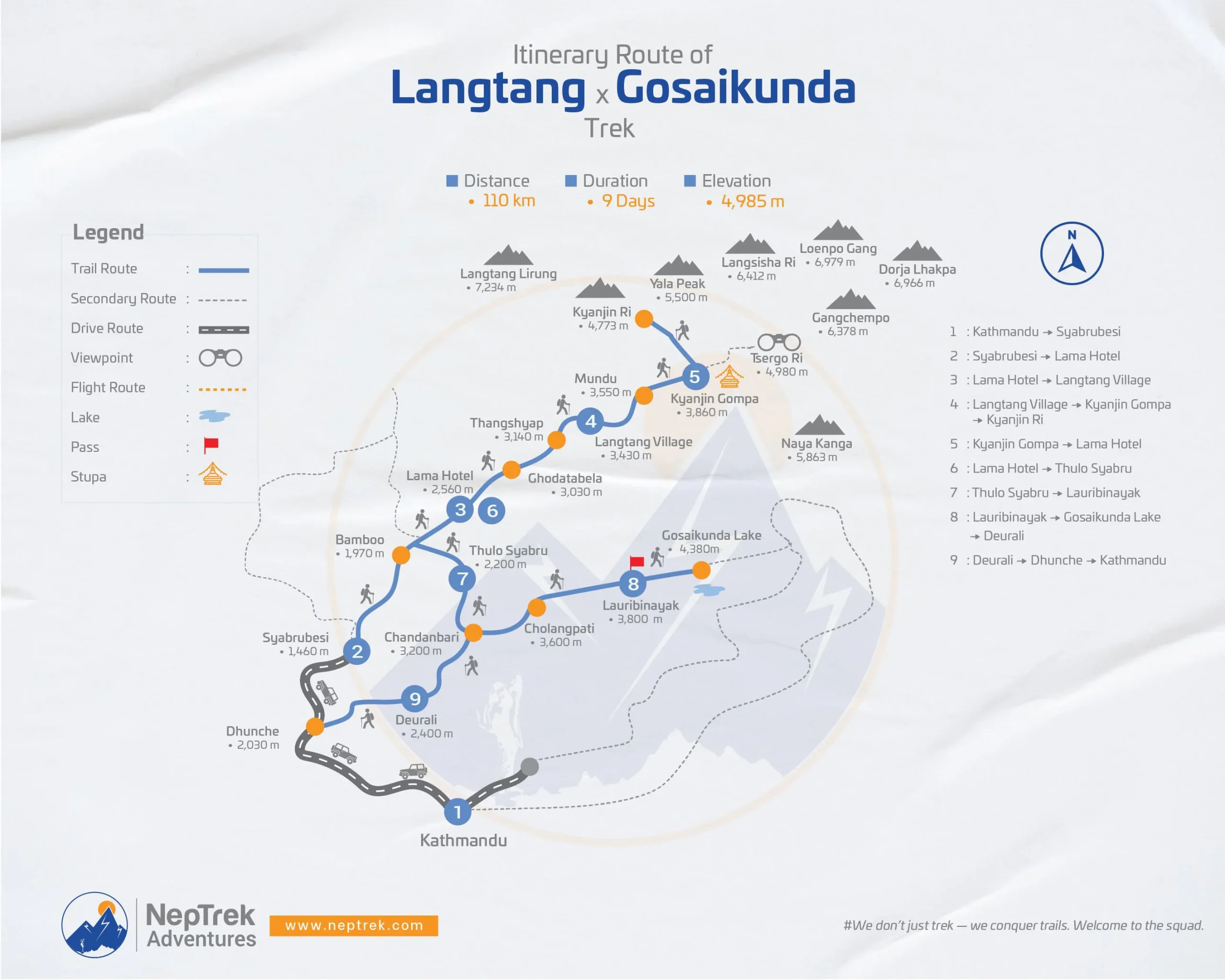
The Langtang Gosaikunda Trek features some significant elevation variations. This trek starts from low elevation, takes you to 4,700 meters high, down to the low elevation, climbs to a higher elevation of 4,300 meters, and trek down to lower elevations. It’s an amazing mix of altitude variance, taking you to two spectacular landmarks of the region.
The table below provides an overview of the popular landmarks in Langtang and Gosaikunda.
|
Syabrubesi |
1,460 meters |
|
Lama Hotel |
2,560 meters |
|
Langtang Village |
3,430 meters |
|
Kyanjin Gompa |
3,860 meters |
|
Kyanjin Ri |
4,773 meters |
|
Thulo Syabru |
2,200 meters |
|
Lauribinayak |
3,800 meters |
|
Gosaikunda Lake |
4,380 meters |
|
Dhunche |
2,030 meters |
A Day on the Trail
Here’s what a typical day in Langtang Valley and Gosaikunda Lake Trek looks like:
- Breakfast at 7:30 and start the trek at 8 am, sharp.
- Trek for 3-4 hours and stop for lunch at a tea house.
- 1-1.5 hours for lunch and a brief rest.
- Trek 3 more hours to the next destination
- Accommodate at the tea house for dinner and overnight accommodation.
- Trek briefings before you go to bed
Best Time for Langtang Gosaikunda Lake Trek
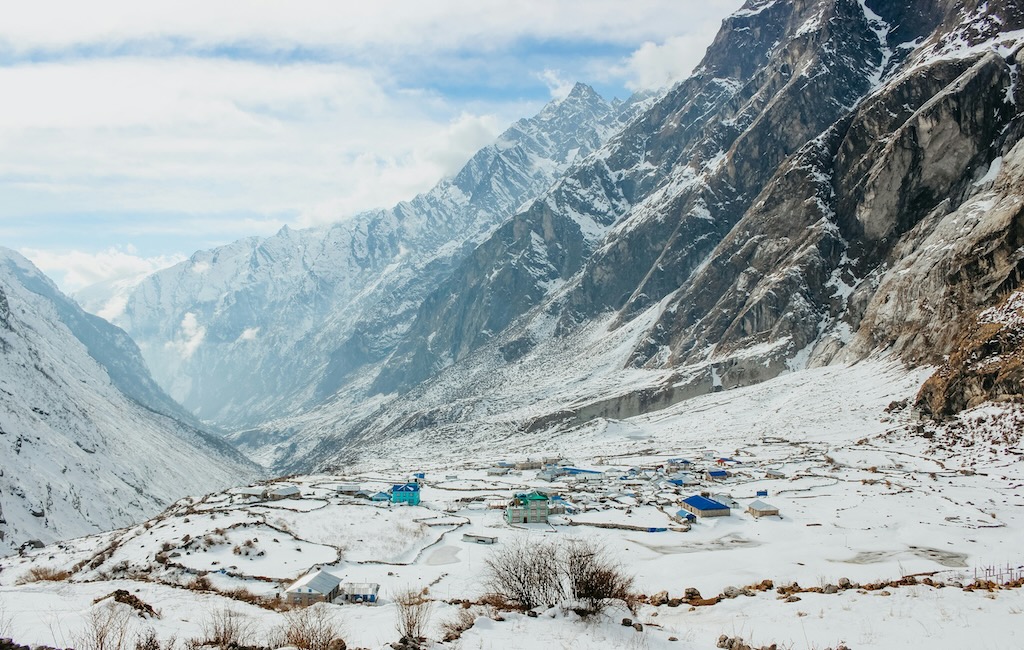
Spring, Autumn, and Winter months are the best time for Langtang Gosaikunda Trek. The crystal-clear weather, snow-filled mountains, and rain-free days make these months absolute for the trek. In Winter, it snows and gets cold. But, on a clear weather day in Winter, Langtang becomes a snow wonderland.
Here’s a detailed breakdown of the weather and temperature of each month in Langtang and Gosaikunda.
Autumn (September, October, and November)
September gets rainy at times with leeches at lower elevations. However, this post-monsoon month blesses trekkers with lush and green landscapes. The temperature remains warm with a daytime temperature of 13-14˚C. The nighttime temperature averages around 0-3˚C.
October is a rain-free month. Moreover, the temperature starts decreasing. The daytime temperature averages 10˚C, and the nighttime temperature averages to -3˚C. Clear skies, stable weather, and utmost visibility are the perks of trekking to Langtang in October. Moreover, with the most pleasing weather, the peak trekking season begins. Expect a crowd of trekkers in October.
November gets cold in the morning and night. The daytime temperature feels like 5-6˚C, and the nighttime temperature is less than -10˚C. The dry weather provides the utmost visibility. The trekkers crowd decreases past mid-November.
Spring (March, April, and May)
Mornings and evenings in March are cold with temperatures averaging -5 to -2˚C. The daytime temperature still feels cold but averages to 8-10˚C. With late snowfall in recent years, you can expect snowfall in Langtang and Gosaikunda in March and April. Moreover, the rhododendron starts blooming at the lower elevations in the Langtang region.
You can expect some snowfall in April. The rhododendron blooms completely, and the entire mid-hill landscape becomes vibrant. The temperature rises in April as the daytime temperature averages 15-18˚C and the nighttime temperature of 2-3˚C.
May gets rainy with occasional thunderstorms. Also, with poor weather, the trekker’s flow decreases. The daytime temperature averages 18-20˚C, and the nighttime temperature averages 5-8˚C.
Winter (December, January, and February)
Winter in Langtang is cold, with snowfall typically occurring around the end of February. However, with almost zero humidity, there’ll be no clouds and foggy conditions for most of it. So, the mountain view remains intact, all day long. If you want to trek to Langtang and Gosaikunda in Winter, proper winter clothing is a must.
The average temperature at Langtang, Kyanjin, and Gosikunda remains below freezing throughout the winter. The Gosaikunda Lake and Lirung Glacier freeze, which can be an exciting sight.
Trek Difficulty and Altitude Sickness
Langtang Valley Trek with Gosaikunda Lake is moderately difficult. Most sections are comfortable and straightforward, with only a few steeper, more demanding sections.
The difficult sections on this trek can be:
- Climbing Kyanjin Ri from Kyanjin Gompa
- Lauribinayak to Gosaikunda Lake Trek
These sections are above 4,300 to 4,700 meters. Here, the oxygen level remains low. And, with low oxygen, trekkers struggle to maintain pace as they experience frequent fatigue.
Will you get altitude sickness on this trek? With our experience of guiding clients in Langtang and Gosaikunda over the years, there’s a faint risk of altitude sickness. While trekking to Langtang Valley, you’ll start the trek from a lower elevation, gradually ascending to 4,000 meters. This way, your body acclimates as you trek higher. And by the time you return to Pairo and trek to Gosaikunda, you’ll be perfectly acclimated. As a result, you won’t get altitude sickness on this trek.
Said this, some trekkers experience mild altitude sickness. And at such instances, with safety protocols in place, you’ll be completely safe.
Acclimatization
The 9-day Langtang Valley and Gosaikunda Lake Trek isn’t an extreme elevation trek. Thus, trekkers with ideal physical fitness don’t need acclimatization stops during this trek. However, if you want an acclimatization day, it can be at Langtang Village or Kyanjin Gompa.
Starting from Syabrubesi, you’ll trek for three days to reach Kyanjin Gompa, with short day walks and adequate rest.
Langtang Valley is below 4000 meters unless you decide to climb Kyanjin Ri and Tsergo Ri. On the day you reach Kyanjn Gompa, you’ll settle in at the tea house for a day. The hike to Kyanjin Ri or Tsergo Ri will be the next morning. Also, on the day from Langtang to Kyanjin, you’ll only trek for three hours. Thus, spending an entire day at the tea house in Kyanjin provides you with adequate rest and acclimatization, should you plan to climb Tsergo Ri or Kyanjin Ri.
By the time you complete the Langtang Valley Trek and return to Thulo Syabru, your body will be well acclimated. Thus, trekking to Lauribinayak and Gosaikunda Lake won’t be an issue. You’ll complete the remaining Gosaikunda Trek without getting altitude sickness.
Who Can Join?
Being a moderate-grade trek doesn’t mean that it’s suitable for everyone. Foremost, Langtang Gosaikunda Trek is a 9-day high-elevation trek with long walking days and distances.
At NepTrek Adventures, we have a strong policy on who can trek to Langtang Valley and Gosaikunda Lake.
- Physically fit novice and seasoned trekkers
- Kids over 8 years and senior of 65 years or younger, with proper physical fitness
- Previously trekked to higher elevations and are physically sound.
We also have a policy on who can’t embark on this adventure, at least with NepTrek Adventures.
- People with chronic health and heart issues
- Anyone with lungs issues
- People who have a history of altitude sickness record
- Kids below 8 and seniors over 65 years old
- Pregnant women
We have a blog topic, Why Trekking Isn’t for Everyone. Check it out to learn if you’re qualified to trek to Langtang Valley with Gosaikunda Lake.
Trek Gears to Bring
Langtang Valley and Gosaikunda Lake Trek is a 9-day adventure in the central Himalayas. And, to trek here, you’ll need proper trek gears and clothes. Please pack clothes according to the time of year you’re planning to trek.
Trekking gears you can bring on this trek are, but not limited to:
- Premium Broken-in trekking boot
- Trekking poles
- 30-40 litres daypack
- Microspikes if you’re trekking in Winter or early Spring
- Poncho or raincoat if you’re trekking in Summer
Regarding the clothes, we recommend layering instead of thick jackets and hoodies. Layering keeps you warm and comfortable, unlike thick jackets and hoodies.
For clothes, we recommend:
- Base layer (thermal), middle layer (fleece), and top layer (down jacket, windbreakers)
- Beanie, hat, gloves, neck buff
- Thermal trousers, trekking pants (waterproof)
- Woollen socks
- Moisture-wicking t-shirts and shorts
- Undergarments (moisture-wicking)
We’ll provide you with a complete packing list after you book this amazing adventure with us.
How to Prepare for the Trek?
How you prepare for the trek determines how comfortable the experience will be. So, for a better trek experience, you must do proper preparations, mental, physical, and backpacking.
Physical fitness for the trek involves building cardio and endurance. While trekking, even on higher elevations, requires efficient breathing. Moreover, trekking for extensive hours over rugged terrain demands endurance. Hence, you must work on building cardio and endurance strength.
For cardio, we recommend:
- Running, jogging
- Hiking
- Swimming
While trekking for an extensive period, your legs get sore. And to avoid this, you must build strength in your legs. This could be done by:
- Climbing stairs in the gym
- Running or walking on a treadmill
- Hiking with a backpack
We recommend building physical fitness for at least two months before joining the trek. Or, if you make an early booking, working on fitness early would be the absolute best.
Langtang Gosaikunda Trek Cost
We’ve designed the Langtang Valley with Gosaikunda Lake Trek price to be one of the most affordable and competitive for your Himalayan experience.
‘The two iconic destinations in Langtang, in 9 days, that too at the best rate, is a deal you shouldn’t miss out on. Be it an individual trekker or a group, we have amazing pricing for this trek.
The trek cost is transparent with no hidden fees. Moreover, we also communicate everything in the cost includes and excludes section before you book the trek.
Extend Your Adventure
Nepal offers exciting and iconic tours. And if you have time to explore the country a bit more, we recommend that you extend your adventure. Whether it is a culturally enriched city or naturally enriched conservation areas and national parks, Nepal offers wholesome tours.
Completing Langtang and Gosaikunda gets tiring. Moreover, for days, you’ll be sunburned and cold, which demands a pleasant rest. There’s nothing like the Chitwan Jungle Safari Tour, where you can relax on luxurious resorts and explore the thickets of Chitwan National Park for tigers, leopards, rhinos, and other exotic animals.
If you adore ancient architecture, culture, history, and religion, Kathmandu city has some amazing heritage sites. Exploring the city for a day or two gives an insight into Nepali culture and ancient history. For this, we recommend a 2-day Kathmandu Sightseeing Tour, completely guided, exclusively for you.
Let us know if you have any plans other than the Langtang Gosaikunda Lake Trek.
Our Team
Our strengths are our guides and porters, who guide you and create an amazing Himalayan experience. For the Langtang region trek, we’ll send you with a guide who’s more experienced in the region. Moreover, all our guides are wilderness first aid responders, ensuring your safety at every step throughout the trek. Together with their experience, they bring the insights and deep knowledge of the Langtang and Gosaikunda region–adding a meaningful touch to your trek experience.
Our porters play an important role in making your Langtang Valley and Gosaikunda Lake adventure memorable. They’ll carry the heavier backpacks so that you can trek light and comfortably. They’re amazing humans, friendly, supportive, and ensuring your smoother trek experience throughout.
Our team creates a well-organized trip, prioritizing safety and minimizing risks. Our efficient logistics to on-trail support, every element of the trek is handled professionally.
Tipping to the Crew
The trekking crew deserves the appreciation at the end of the trek. Tipping them is a way to appreciate their efforts and hard work in making your adventure one of a kind. And it’s a common practice in trekking in Nepal.
It’s not mandatory to tip guides and porters. However, trekkers treat them as a sign of gratitude.
This voluntary action can be a collective effort if you’re trekking in a group. However, it can also be an individual choice. And the amount depends on how good your experience was throughout the trek.