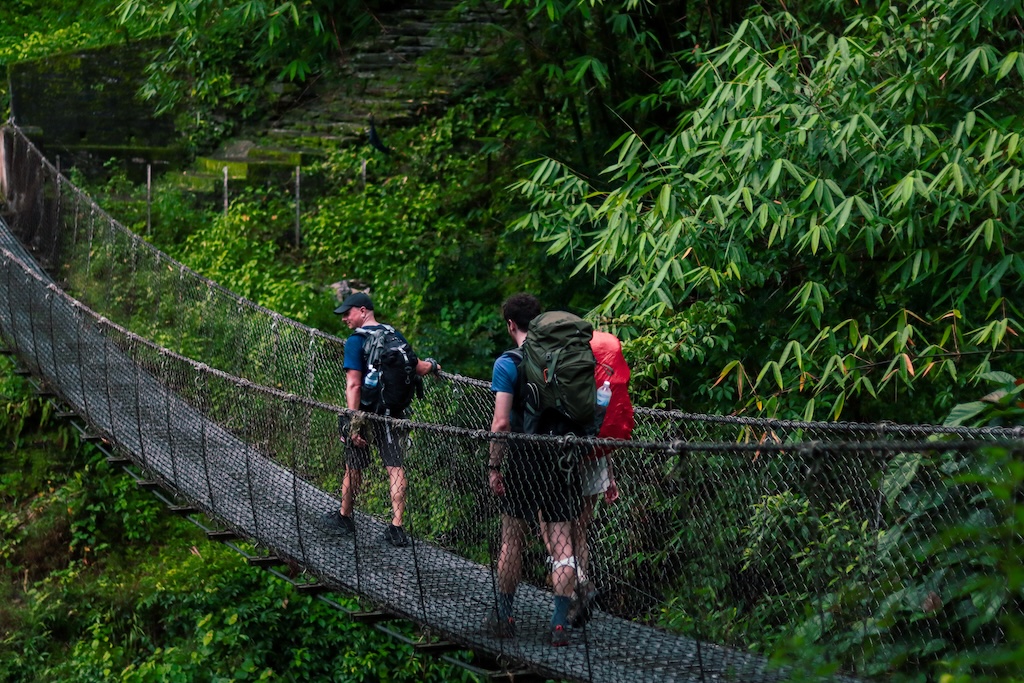
Annapurna Base Camp Trek Safety revolves around a few significant elements. If you consider this trek, prepare yourself in areas such as backpacking, physical fitness, altitude sickness, weather, and seasonal safety. Moreover, for enhanced safety and a better trekking experience, it’s best to plan this trek with an agency and trek with a licensed trek guide.
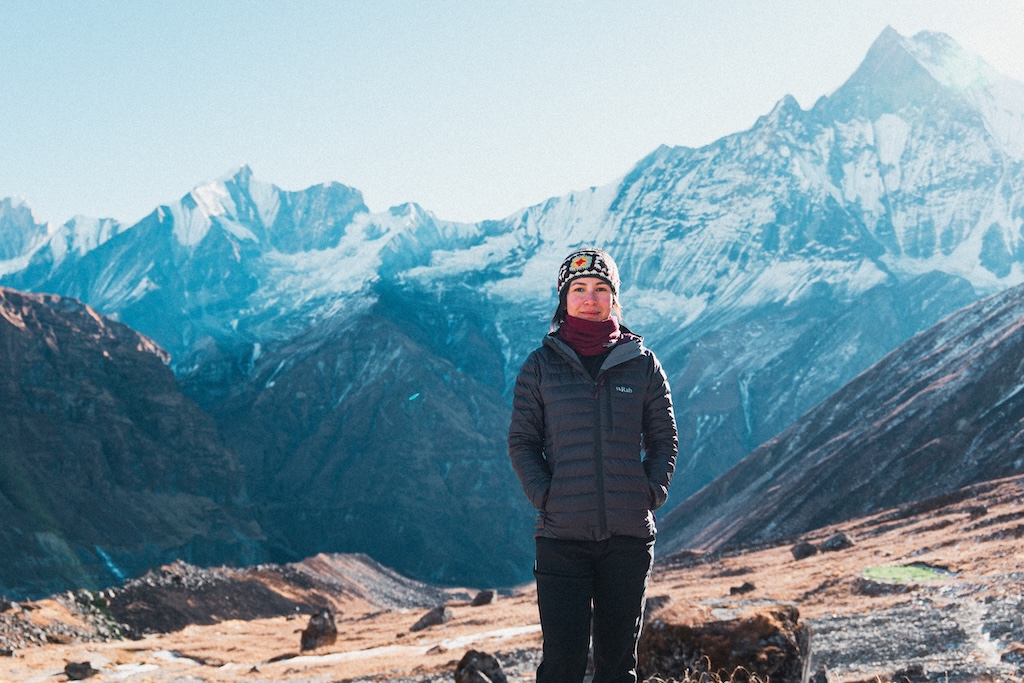
The 10-day Annapurna Base Camp Trek from Poon Hill is the most popular among adventurers in the Annapurna Sanctuary. From surreal mountain panorama, vantage points, traditional hamlets, and a serene walk through lush and green forest, it takes you to the base camp of Annapurna. And, once you complete this 10-day trek, you’ll get an entire Annapurna Sanctuary experience.
But, embarking on this trek, is it safe? Whether you are a novice or seasoned trekker, a solo or female trekker, is Annapurna Base Camp safe to trek? One word, YES.
This blog has everything about the trek’s safety and ways to prepare yourself.
Annapurna Base Camp Trek Safety Overview: What to Expect?
As a trekker, here are a few things you must know about the Annapurna Base Camp Trek.
Duration
The duration of the ABC Trek varies depending on the route you prefer.
For example, if you include Ghorepani and Poon Hill, including the base camp, it takes at least 10 days to complete the entire trek. However, if you’re a time-bound trekker, you can start the trek from Jhinu and complete it in just 5 days. Moreover, for a comfortable trek experience, it’s best to do this trek in 7 days.
Trekkers often plan the ABC Trek with the Mardi Himal Trek. Usually, those who have completed the Ghorepani Poon Hill Trek before consider doing the Annapurna Base Camp and Mardi Himal.
In a nutshell, there are various duration choices for adventurous souls and careful planners.
Elevation
Annapurna Base Camp Trek isn’t an extreme elevation trek. The highest elevation you’ll reach on this trek is 4,130 meters at the base camp. Even being a low elevation profile, trekking here isn’t easy. It demands a certain level of physical fitness and trek preparation.
Other popular landmarks you’ll be visiting on this trek are Ghorepani at 2,874 meters and Poon Hill at 3,210 meters.
Terrain
Annapurna Base Camp Trek, particularly the 10-day trek, is full of natural scenery, traditional hamlets, and amazing vantage points. The entire journey rejuvenates and recharges your soul. You’ll come across serene terrace farming, sub-tropical forests, waterfalls, rivers, and suspension bridges.
As most of the route of this trek is through mid-hills, you’ll spend two days in a high-altitude region, one at Deurali and another at the base camp.
Best time for Annapurna Base Camp Trek
The trek’s safety and difficulty depend on when you plan it. The best times for the Annapurna Base Camp Trek are Spring (March-May) and Autumn (September-November). However, you can also trek here in December and January.
These months are best because of clear weather, gentle temperatures, and wholesome mountain scenery.
For example, if you trek to ABC in August, it rains a lot. And with rain, the chances of landslides and flooding increase. Thus, the heavy rainy season and snowy February can be challenging and risky.
Trek Difficulty
Annapurna Base Camp Trek via Poon Hill isn’t an extremely difficult trek. It’s rather a moderate-difficult trek. Most of the route sections are easy to trek if you’re an experienced trekker. And even if not, you’ll comfortably complete this adventure on a good note.
Now that we’ve explained some of the things you can expect from the trek, let’s get into the trek safety and other essential information.
Annapurna Base Camp Trek Altitude Safety
Annapurna Base Camp Trek isn’t an extreme elevation trek. However, it sits at an altitude where trekkers often experience mild to severe altitude sickness symptoms.
The risk of altitude sickness starts at an elevation of 2,500 meters. Getting altitude sickness at this altitude is very rare and thus, depends on the person’s physical condition and sensitivity. Mild symptoms appear between 2,500 and 3,500 meters above sea level. Even getting altitude sickness at this altitude, it’s curable with proper acclimatization and medication.
Those without proper acclimatization and trek preparation often develop altitude sickness at Deurali and Machhapuchhre Base Camp. Thus, for them, it can be life-threatening should they decide to go to the base camp at 4,130 meters.
Here are ways to prepare yourself for the altitude and be safe throughout the 10-day trek.
Gradual Ascent and Acclimatization (Optional)
One of the best practices on a trek like the Annapurna Base Camp Trek, which doesn’t need acclimatization stops, is a gradual ascent. A slow and steady-paced walk gives ample acclimatization and thus, you’ll avoid altitude sickness. Moreover, the slow-paced walk doesn’t tire you and keeps your legs un-fatigued.
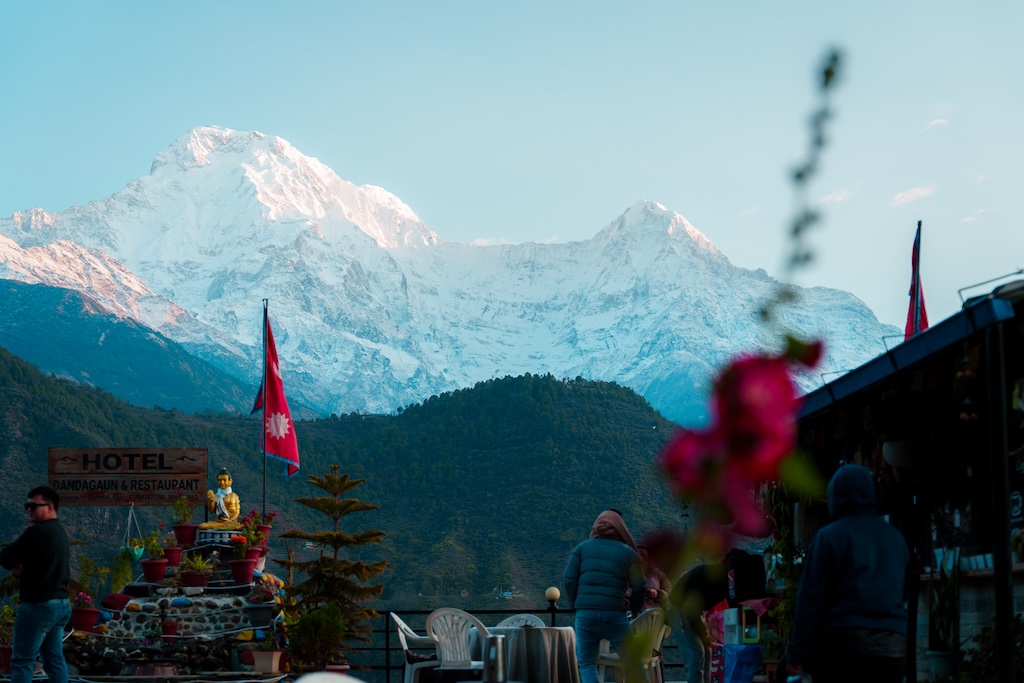
However, if you want to take an acclimatization day, we suggest you stop at Chhomrong. It’s a beautiful village located at an elevation of 2,000 meters. What makes this place most appealing for acclimatization is the surreal view of Annapurna South, Hiunchuli, and Machhapuchhre.
Warning Signs of Altitude Sickness
Symptoms of altitude sickness are similar to those we experience on a regular day. Thus, the symptoms of altitude sickness aren’t always dramatic.
Here are the most apparent symptoms you’ll experience during altitude sickness.
- Persistent headache, primarily at the back of the head
- Dizziness, lightheadedness, nausea, and vomiting
- Extreme fatigue, difficulty in breathing, and trouble sleeping
- Loss of appetite, indigestion, and diarrhea
Note: If you get altitude sickness, at least three symptoms appear together. And if you ignore these symptoms, they become severe. The severe mountain sickness becomes HAPE and HACE, the life-threatening symptoms.
Diamox: An option!
Trekkers who plan adventures in Nepal usually consume Diamox (Acetazolamide). It prevents altitude sickness. Thus, for the 10-day Annapurna Base Camp Trek via Poon Hill, we advise you to take this medicine to avoid altitude sickness. However, you must be aware of its side effects and bring an adequate supply and doses after consulting with your physician.
Medical Clearance: A Must!
It’s mandatory to have a medical clearance if you have existing health issues. For example, if you have a respiratory and/or cardiac chronic illness and want to embark on this adventure, you must provide us with proof of your medical clearance.
Trekking with an existing illness causes serious issues. It’s due to physical exertion and low oxygen levels at higher elevations. Moreover, the underlying existing illness often causes altitude sickness. Hence, consult with a physician and get a whole body check-up before leaving for the trek. Unless your physician and check-up reports are clear, it’s best not to plan the trek.
Annapurna Base Camp Trek Safety: Weather and Seasonal Impact
Weather and seasonal conditions significantly impact trek safety. The weather and seasonal impact determine the challenges and highlights of the trek. For example, dry months in Autumn are safer with clear weather than snowy winters and rainy summers. Thus, you must plan this trek in the Spring and Autumn months. However, there are other months, such as January and August, which are less popular but still safe for trekking.
Spring (March, April, and May)
March, April, and May are amazing months to plan and trek to Annapurna Base Camp. The weather remains crisp, with snow-capped mountains, vibrant landscape, and blooming rhododendrons.
It can get snowy during March. And with snowfall, a few sections past Deurali are prone to avalanches. However, ACAP makes an alternate route from the other side of the river, which is safe. Also, the trail past Machhapuchhre Base Camp gets slippery. Hence, you’ll need microspikes and trekking poles for comfortable and safe walking.
April is the pitch-perfect month with snow-free trails, clear weather, surreal mountain views, and a wholesome trek experience.
Mid-May can get rainy, and thus, the trails get slippery. Hence, you must bring waterproof trekking pants and boots if you’re planning this trek in May.
Overall, spring is considered the safest and best time to trek to Annapurna Base Camp.
Winter (December, January, and February)
It snows and gets very cold in winter at Annapurna. Thus, very few trekkers plan this trek.
The tea houses along the trek aren’t heated. Thus, your warmth depends on the clothing you bring for the trek, such as a sleeping bag, a down jacket, etc.
This being said, we’ve guided many clients to Annapurna Base Camp in January. Thus, based on our experience, we can assure that if you can manage the cold, the Winter trek to Annapurna Base Camp is one of a kind.
Autumn (September, October, and November)
Autumn is undoubtedly the safe and best time of the year to trek to Annapurna. And because of it, most trekkers plan this trek. Also, Autumn is rain-free, with clear weather, a picturesque mountain sight, and more.
Early September can get rainy. However, when the weather clears, even the slightest sight of mountains leaves you in awe. The clear weather, surreal mountain views, and elegant sunrise and sunset make Autumn an ideal time for photography. Not to mention, the pitch-perfect Autumn’s weather draws a significant number of trekkers, making tea houses fully occupied.
Thus, to avoid the occupancy and logistics snags, we recommend that you book this trek with a trekking agency like us.
Annapurna Base Camp Trek Safety in Summer
Monsoon trek to Annapurna Base Camp can get you into trouble if you’re trekking solo or are at least an experienced hiker. But, if you’re planning this trek with an experienced trek guide, it’ll be a lively adventure soaked in rain and humidity.
A swarm of leeches and landslides are major risks in the Summer months, particularly in July and August. The heavy rainfall often washes away the wooden bridges and trails.
To start the trek, you need to take a drive from Pokhara to Samrong. Half of this roadway is off-road and is prone to landslides. Thus, the road often gets blocked throughout the rainy season.
Moreover, you’ll barely see mountains due to poor visibility with rain, clouds, and overcast.
Hence, for these reasons, the Annapurna Base Camp Trek in Summer isn’t recommended.
Annapurna Base Camp Trek: Trail Safety and Terrain Conditions
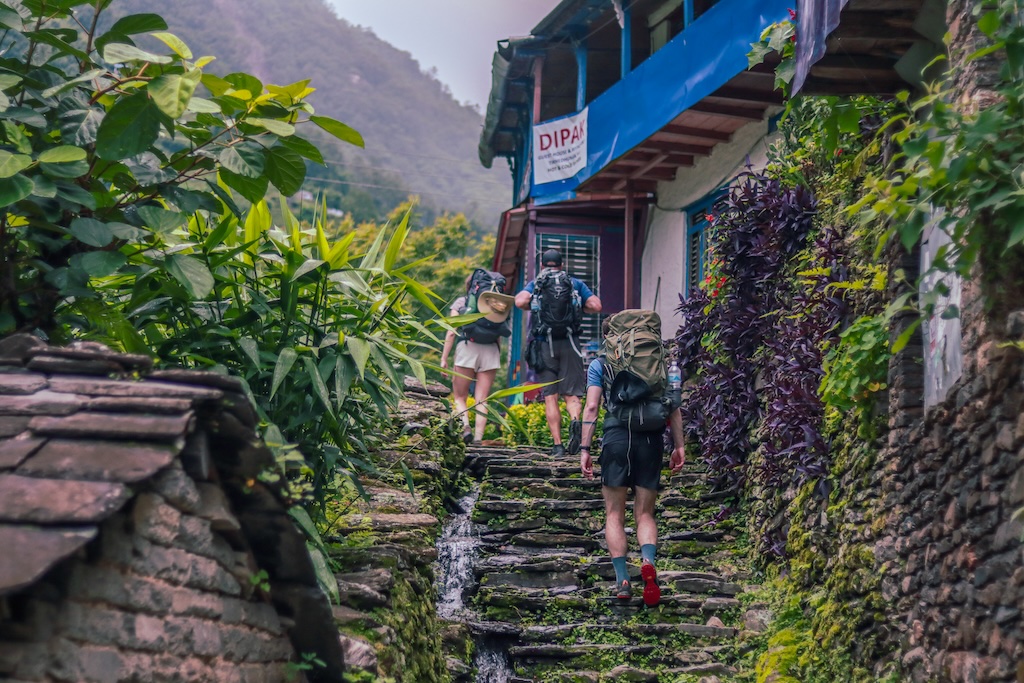
Almost all the trail sections to Annapurna Base Camp are well established. Recently, the Annapurna Conservation Area Project has completed the stone-paved stairs from Himalaya to Deurali and Deurali to Machhapuchhre Base Camp at most sections. And probably, by the start of Autumn 2025, trekkers can enjoy the safe walk over the stone-paved stairs.
The route other than the paved one is natural, dirt-packed. Thus, depending on weather conditions, the trail can get slippery or dusty. But through the forest and hamlets, you’ll find the joy of walking over the serene trails.
Here’s how the trekking route can be safe and unsafe, depending on the weather conditions.
Be Aware of:
- Slippery trail (usually after rainfall, small streams, and close to waterfalls)
- Frozen icy sections (don’t step on them without crampons or microspikes)
- Long and steep stone-paved stairs at Chhomrong and Ulleri (train your knees)
- Narrow ridge-line at Sinuwa-Bamboo section (always walk to the right and follow the guide’s instruction)
- Avalanches past Deurali (take an alternate route on the other side of Modi River)
- Leeches during summer trekking
Medical Access and Emergency Protocols
You’ll get basic first aid treatment on the trek if you suffer minor injuries. However, if you get altitude sickness and suffer severe injuries, you’ll need a helicopter evacuation. Therefore, we recommend obtaining travel insurance with helicopter evacuation coverage up to 4,200 meters in elevation.
Places like Ulleri, Ghorepani, Ghandruk, and Chhomrong have basic medical clinics. The higher elevations don’t have any health posts or clinics. At Machhapuchhre Base Camp, a health post is available to provide basic treatments and administer oxygen as needed. However, for severe AMS and other sicknesses, helicopter evacuation is a must.
Even if you get the travel insurance, double check it and make sure it includes the helicopter evacuation. We once had a client who bought travel insurance, considering it included helicopter evacuation coverage. She got altitude sickness at Annapurna Base Camp, and we contacted her insurance regarding the helicopter rescue. Later, the insurance company wrote us that the insurance doesn’t cover helicopter rescue. Due to this, we had to carry and walk her down to Deurali until she recovered from the sickness.
Annapurna Base Camp Trek Safety: Guided Vs. Solo
Trekking solo is exciting as it allows you to enjoy the serene nature and wholesome mountain panoramas at your own pace. However, outdoor activities are associated with unforeseen risks, and you may get stuck in them. And when there’s no one by your side in an emergency, you’ll find yourself in trouble. Thus, while solo trekking can be exciting, it often comes with risks. And to be safe on adventures like the Annapurna Base Camp Trek, it’s best to hire a trek guide.
Note: Annapurna Base Camp Solo Trek is permitted. For experienced trekkers, it’s okay to embark on this trek solo. However, for novice trekkers, hiring a trek guide and porter changes the entire trek experience.
Perks of trekking with licensed trek guide
- Real Time Terrain and Weather Advice: An experienced trekking guide will accompany you throughout the trek in the best way. Whether it’s by contacting fellow guides or collecting information from the tea houses en route, a trek guide plans the trek. Usually, the guides collect information regarding the trail conditions, rivers and streams volume during the rainy season, landslide risks, snow depth, and more. Thus, trekking with a guide puts you at an advantage of knowing the terrain and weather in advance, which increases the overall trek’s safety.
- Wilderness First-Aid Responder: Most licensed trekking guides are certified as wilderness first-aid responders. Thus, they’ll administer the first aid treatments for you if you get any injuries during the trek. And if it’s serious, they’ll stabilize you until the emergency rescue helicopter arrives. Moreover, they’ll set your walking pace, instruct you frequently, recognize altitude sickness symptoms, etc.
- Adaptive Routing and Flexible Itinerary: Another perk of trekking with a licensed experienced trek guide is adaptive routing and flexibility on the trek itinerary. For example, if you lag behind the time for a day, your trek guide plans the itinerary in a way that you recover for the lag on the next day or following days. For example, if your itinerary has an overnight at Tadapani and Chhomrong, what your guide can do is trek down to Chuile for an overnight and Lower Sinuwa the next day with a lunch stop at Chhomrong. Moreover, if the trail is risky with landslides and avalanches, your trek guide will follow the adaptive routing. For you, all these can get overwhelming, given the completely new environment.
Annapurna Base Camp Trek Safety Precautions: Must follow!
Your trek must be well-organized, and precautions well-practiced. Throughout the trek, you must be disciplined, follow the guide’s instructions, listen to your body, communicate well, rehydrate, and more.
Here are some key safety measures you must practice every day on the trek to maintain utmost safety.
Start Early
It’s better to start early each day. Why?
First, to avoid the steep ascents in midday’s heat. For example, if you start early, you’ll be able to avoid most steep sections and the scorching heat of midday. Moreover, the overcast comes in after 2-3 pm, which you can avoid if you start early.
Moreover, the walk over frosted terrain gets easier during the morning.
Stay Hydrated- No excuse!
You’ll sweat a lot throughout the walk. Moreover, the long and tiring walks exert the body’s muscles. Thus, hydration is crucial for muscle recovery and to balance water levels in your body.
During cold days, you often miss out on hydrating because of chilly air and a dull sense of thirst. Moreover, your body loses heat and water as moisture without noticing. Hence, you must rehydrate frequently with lukewarm water.
To replenish the essential body ions with rehydration, you can use oral rehydration salts in a water bottle.
Share your trek itinerary
If you’re attempting the Annapurna Base Camp Trek solo, it’s wise to let the tea house you stay at know your itinerary and return dates at the same tea house from base camp. Moreover, share the trek itinerary with your family and the hotel in Pokhara. Doing this, if you get lost or get into trouble, it becomes easy to locate you along the trek.
However, if you’re trekking with an agency by hiring a guide and porter, you’ll be on constant watch throughout the trek. Your trek guide remains in constant touch with the trek manager back in Kathmandu. Moreover, during health emergencies, your trek guide coordinates with relevant stakeholders to get a helicopter for rescue.
Bring altitude medications and a First Aid Kit
Altitude sickness medication is not necessary for the Annapurna Base Camp Trek, especially if you’re doing it from Ghorepani Poon Hill for 10 days. However, if you don’t want to risk the trek, it’s best to take Diamox (Acetazolamide). Once you consume this medicine, you must take it once every 24 hours. Thus, carry an adequate dose as per the trek itinerary.
Regarding a first aid kit, if you prefer to bring one, it’s good. But your trek guide carries a first aid kit anyway. If you bring personal first aid kits like moove spray, cotton rolls, and bandages, you can use them whenever you want to.
Layering and staying dry
While trekking, instead of putting on thick jackets and hoodies, it’s better to use thin thermal layers. Layering provides warmth and body flexibility.
However, once you arrive at the tea houses for overnight accommodation, you have to use the jackets and hoodies.
Another important thing is to keep your body dry. Especially, the humid days in September, April, and May make you sweat a lot. Hence, you must change your sweaty inner layers or t-shirt if they get wet. Usually, you start in the morning, trek until lunchtime, and change into the wet t-shirt.
Wearing wet shirts and layers can get you cold and ultimately cause a cough. And as the symptoms worsen, you’ll have no choice but to abort the trek.